
Plaited Basketry Workshop
Friday 19 June & Saturday 20 June, 10.00 - 16.30
Ticket price includes lunch and refreshments on both days
Tickets: £160 Book here
Members: £128 Book here
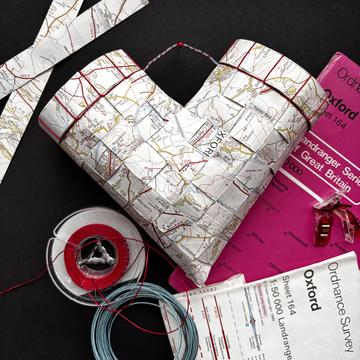
Plaited basketry is found around the world where materials are easily made into long flat ribbon-like strips - including palm leaves, bamboo, birch bark and cane. Alternatively more modern manufactured materials including plastic packing tape, Somband, cardboard and papers can be used.
Plaited basketry can be relatively straightforward to work with a simple over one/under one ‘checkweave’, or far more complex twill patterns. A defining feature of plaited basketry is the similarity between weaving elements, in other words, little distinction between stakes and weavers (warp/weft). Plaited basketry techniques also include triaxial hexagonal plaiting, right through to the appropriately named ‘mad weave’. Rest assured this introductory course will only be looking at checkweave!
In this two day introductory workshop we will be working with old maps to learn the techniques for making a small basket based on 'elbow baskets', made by the Choctaw people in South East USA. The ‘elbow basket’ is traditionally made with river cane and various forms and weave patterns are made - some simple and others more complex. As with most basketry techniques many variations are possible depending on scale and materials used for working.
In the workshop you will learn how to prepare your weaving strips, how to work basic checkweave, then on to making the elbow basket form, how to work a simple border, and finally adding a small hanging handle.
If time allows, it might be possible to make a additional small basket using plaited basketry techniques.
Your tutor, Polly Pollock, will bring along suitable old maps for you to use, together with any other materials and simple tools you’ll need.
During this 2-day course you will have the opportunity to look at plaited basketry in the Pitt Rivers Museum collections. Polly will prepare a trail map showing the location of interesting examples of plaited basketry in the displays. The workshop will take place behind the scenes in the Conservation Laboratory where you be able to see a few more examples from their reserve collection.
Polly will also bring a selection of plaited baskets from her personal collection, as well as samples and examples to illustrate other materials which can be used for plaited basketry techniques.

