Crafting Continuity and Change

In Naga communities across northeast India, the tradition of weaving on backstrap looms continues to this day. Practised by women, often in their homes, textiles are made both for cultural occasions and to provide income for their families.

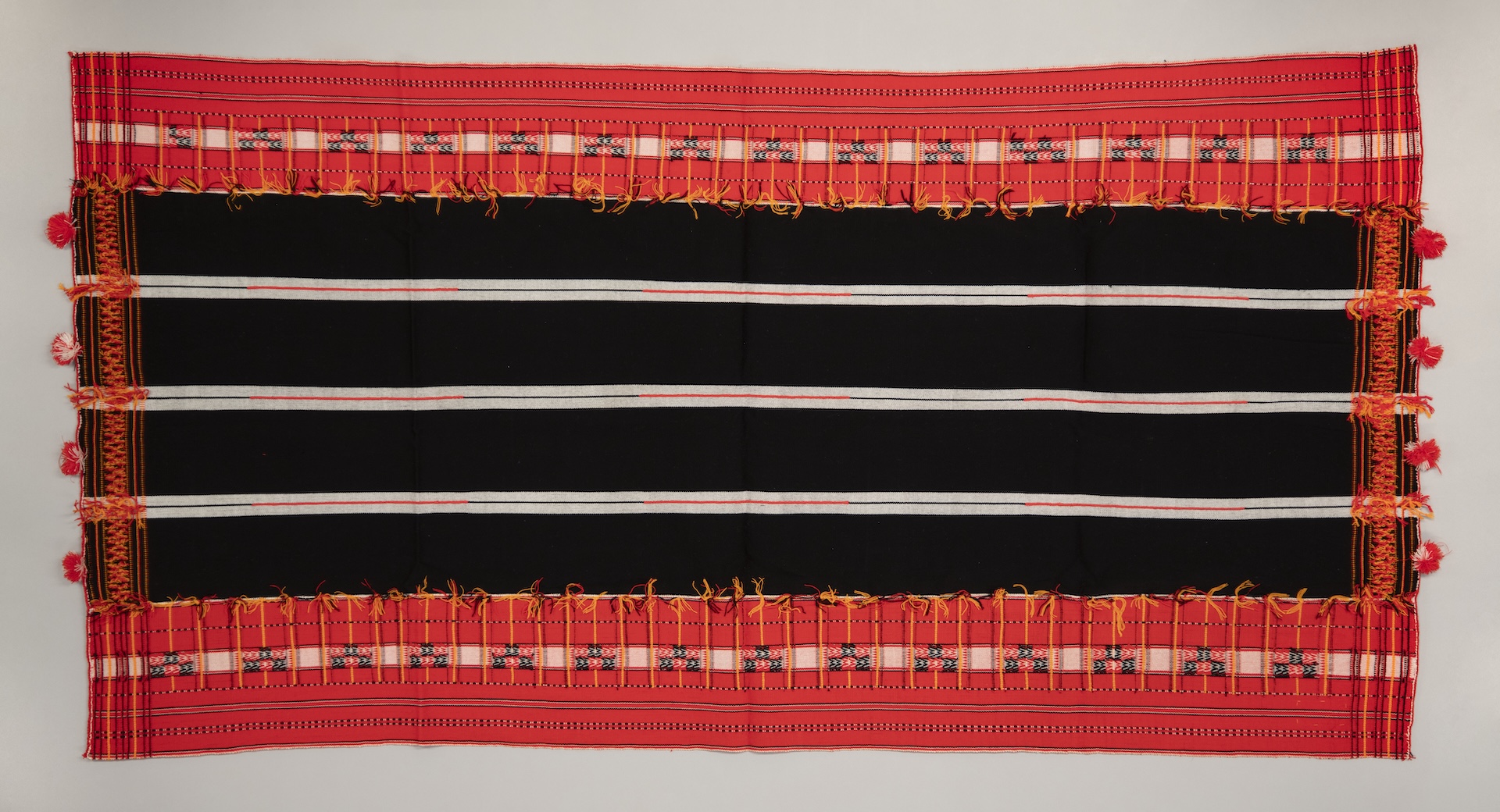
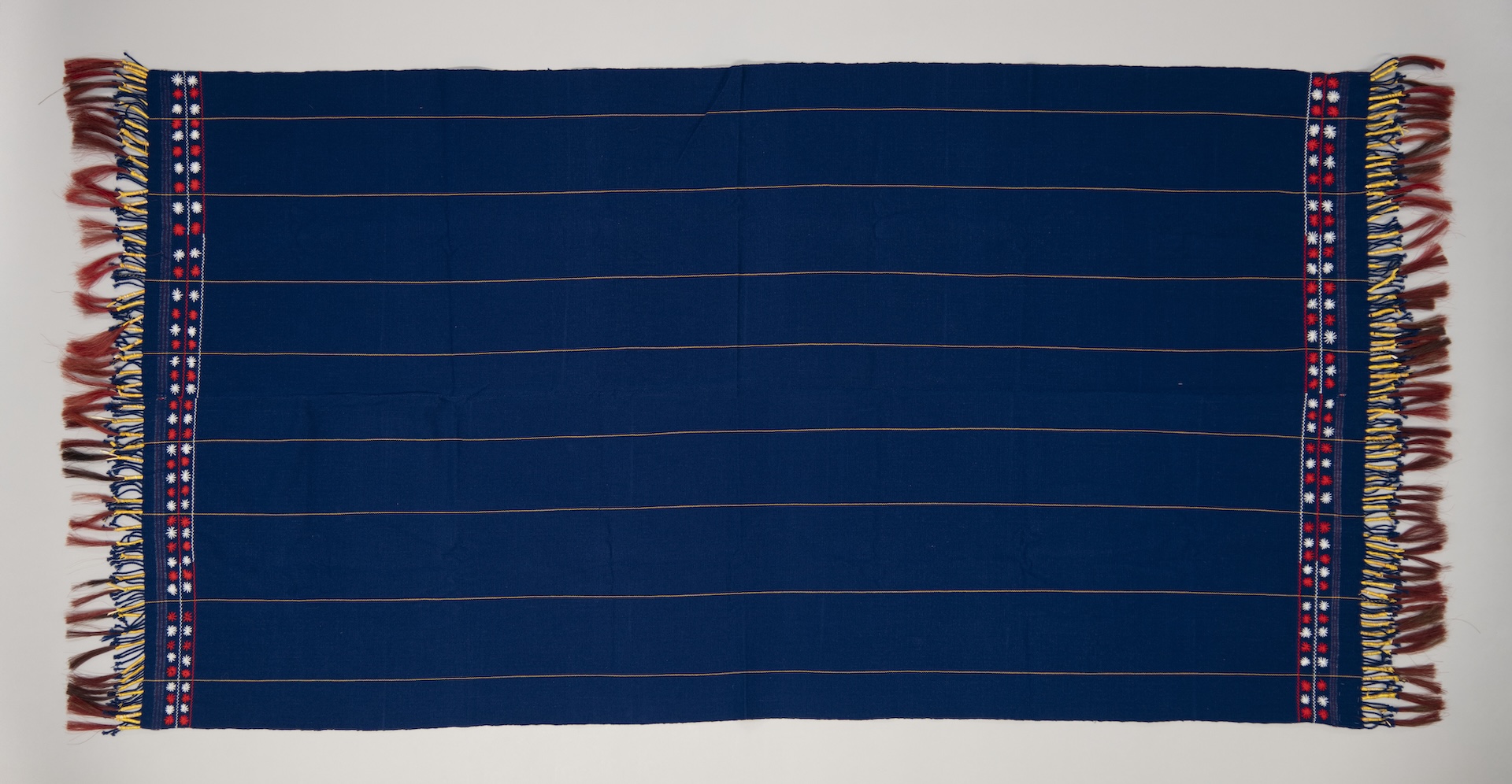
This gallery displays textiles created through a collaborative project that shared images of a collection associated with the Naga religious and political leader Gaidinliu. The original textiles have been stored in the Pitt Rivers Museum since the 1930s. Weavers from two related Naga communities, the Rongmei and Liangmai, were commissioned to create new versions. Some closely replicated the historic textiles, while others interpreted them more freely. All were woven using traditional hand-weaving techniques, but with chemically dyed synthetic yarn.

Sharing digital images of the original textiles led to the rediscovery of historic patterns and long-abandoned materials, such as orchid stems. In the process, Naga women crafted a revival of interest in Gaidinliu’s legacy.


"What was once seen only in archival photos was brought back, not exactly the same, but alive in new hands." 

- Lanchamei Monica Golmei (Project Researcher)

 

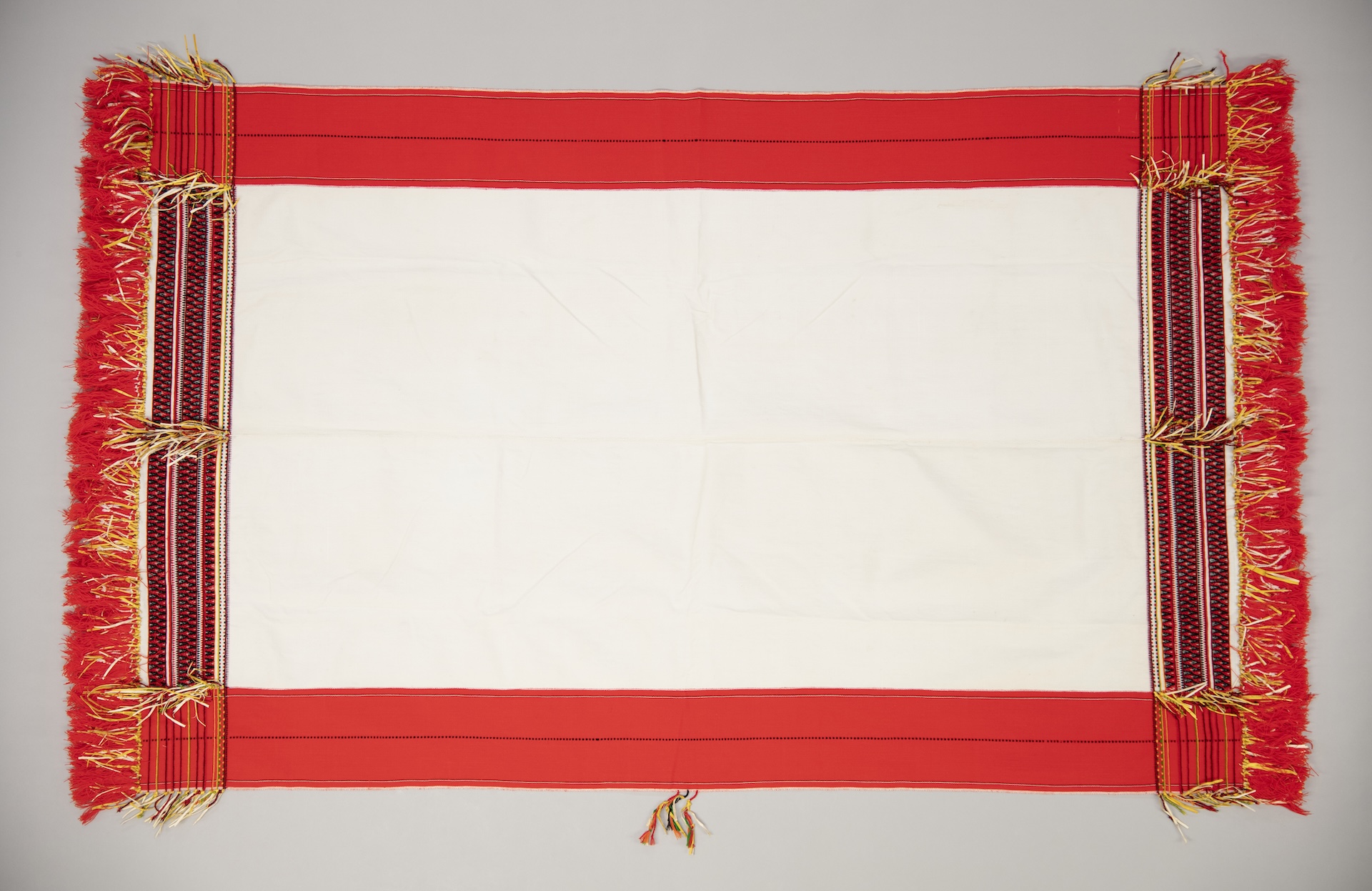
White Naga textile with red borders and black and red arrow designs along centre.


Motifs and Memory

Intricate patterns and motifs are a key element of Naga weaving and require a high degree of skill. Fine details are often woven into the fabric itself, though some may be embroidered onto the cloth afterwards.

Many motifs are inspired by animals in the local environment. For example, some Rongmei designs are known as sinnai (dog's teeth), phimik (pigeon's eye) and karam (butterfly).

Weavers recalled learning these motifs from their mothers and grandmothers. As weaving became more commercialised during the twentieth century, fewer motifs were used. Recognising forgotten designs in images of the Gaidinliu textiles encouraged weavers to reintroduce them into their work.


"Now that I've seen and made this old design again, I will keep it. It won't disappear from my loom again."

- PG Dimjanglu (Rongmei Weaver)
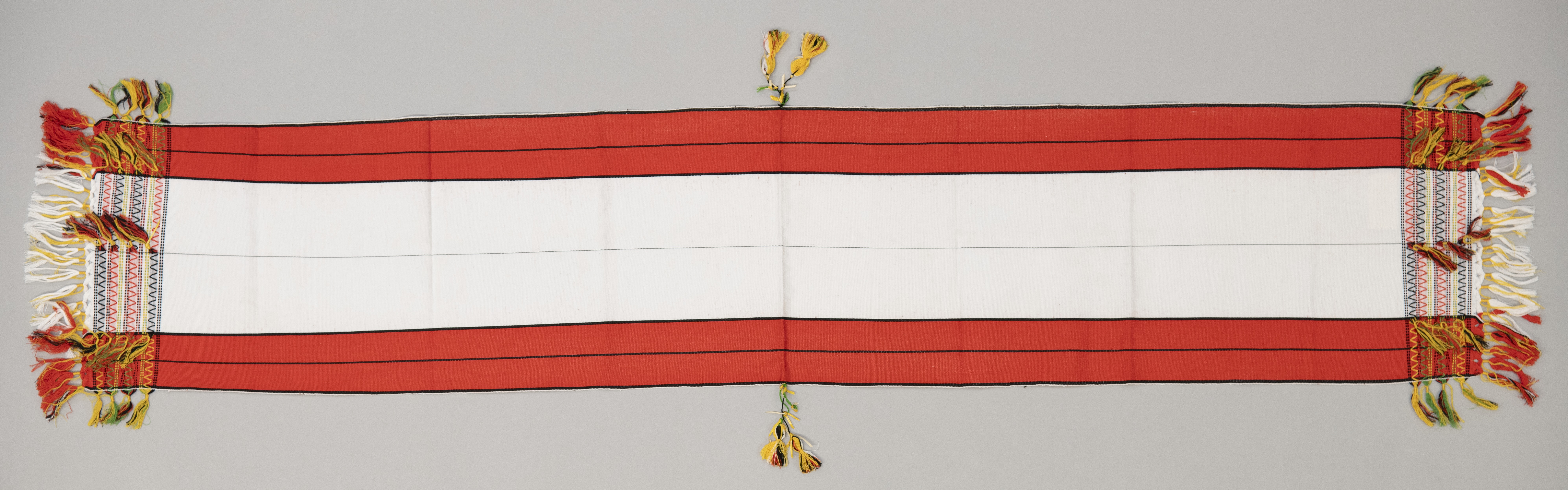
 

Long white textile with red bands along edges and multicoloured fringing at both ends.


Materialising the Digital

All of the textiles in this gallery were made by weavers in northeast India in response to textiles in the Gaidinliu Collection held at the museum. The weavers were presented with digital images of the originals or saw prints of them in pop-up exhibitions. However, during the weaving process itself, they worked chiefly from images on their mobile phones, making fine details difficult to see and contributing to differences in the resulting textiles.

Despite these challenges, the weavers expressed pride in remaking items associated with Gaidinliu, who remains highly revered in Naga communities today. They agreed that the original textiles should remain at the Pitt Rivers Museum for now and have created a WhatsApp group to share information about them and preserve their ‘new’ designs.


"This project allowed weaving to serve as a powerful tool for cultural revival, bringing long-lost tradition back into living memory."

- Lanchamei Monica Golmei (Project Researcher)
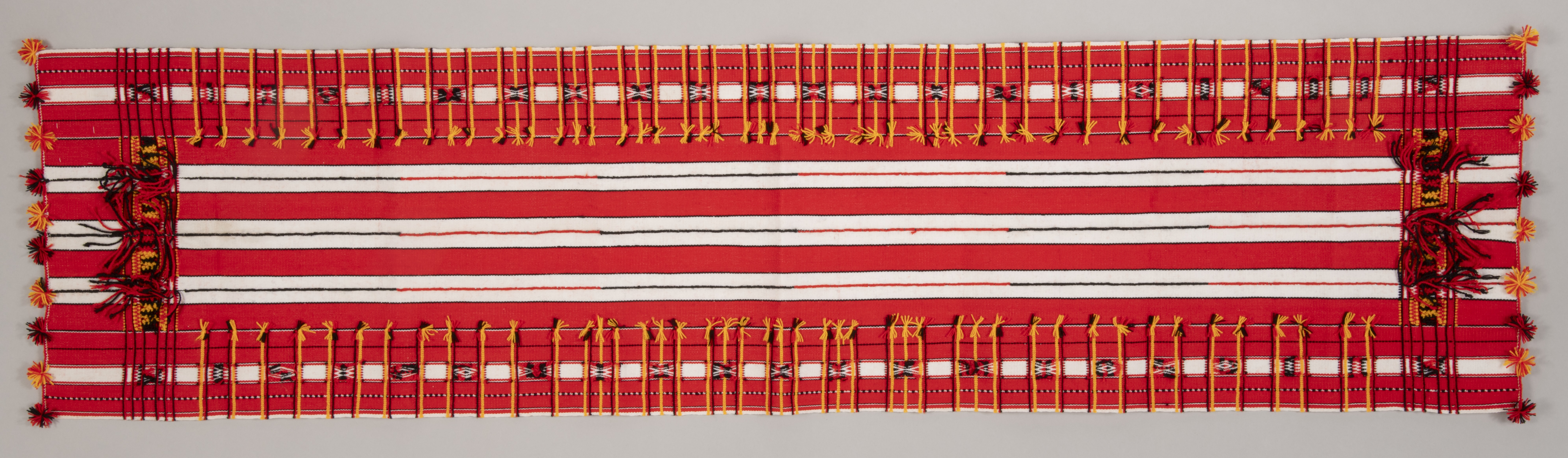
 

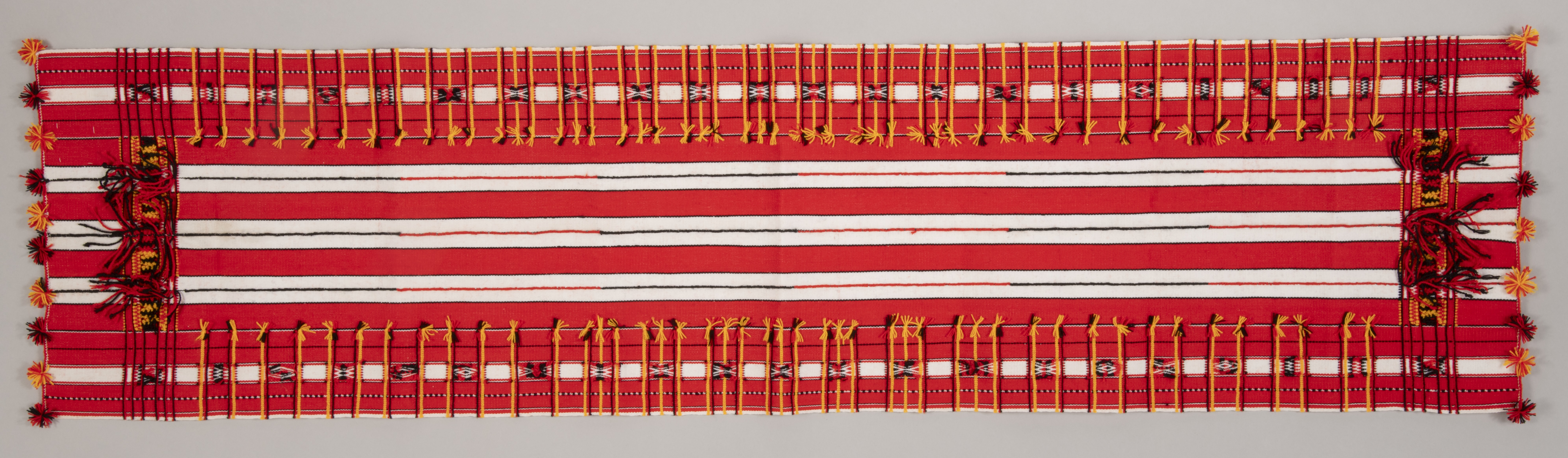
Red Naga textile with narrow white stripes and tassels along ends.
 

Weaving on the Backstrap Loom

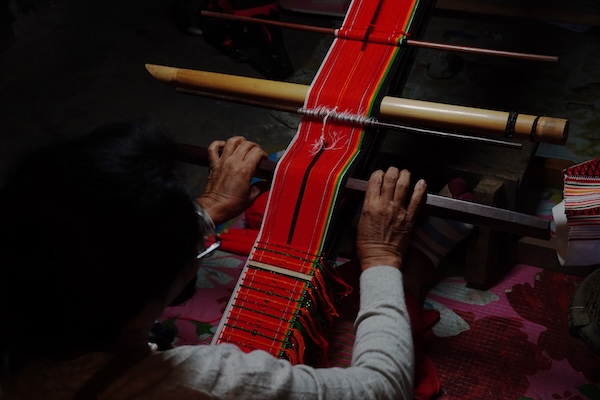
Weaving on a backstrap loom is one of the world's oldest methods of textile production and has been practised across Northeast India for centuries. It is particularly suited to home-based weaving, requiring little space. One end of the loom is attached to a stable support, such as a pole or hook, while the other is tied to a strap worn around the weaver's back.

Using a backstrap loom requires considerable skill and strength, as the weaver's body maintains the tension of the threads. The cloth produced is usually no more than 38 centimetres wide, so larger textiles must be made from separate panels sewn together. Look closely at the textiles displayed opposite to spot the stitches that join these panels. All were woven on backstrap looms.
 

Frequently Asked Questions

Expand All

There are 27 objects in the Gaidinliu Collection at the Pitt Rivers Museum, including the basket containing Gaidinliu’s prophetic notebooks and some of her dress and body ornaments.

The 27 objects that make up the Gaidinliu Collection were acquired in the 1930s by anthropologists, district officers and members of the British army in northeast India during the colonial period. The majority of them were donated to the Pitt Rivers Museum by anthropologist and colonial officer James P Mills, who had connections with curators at the museum.

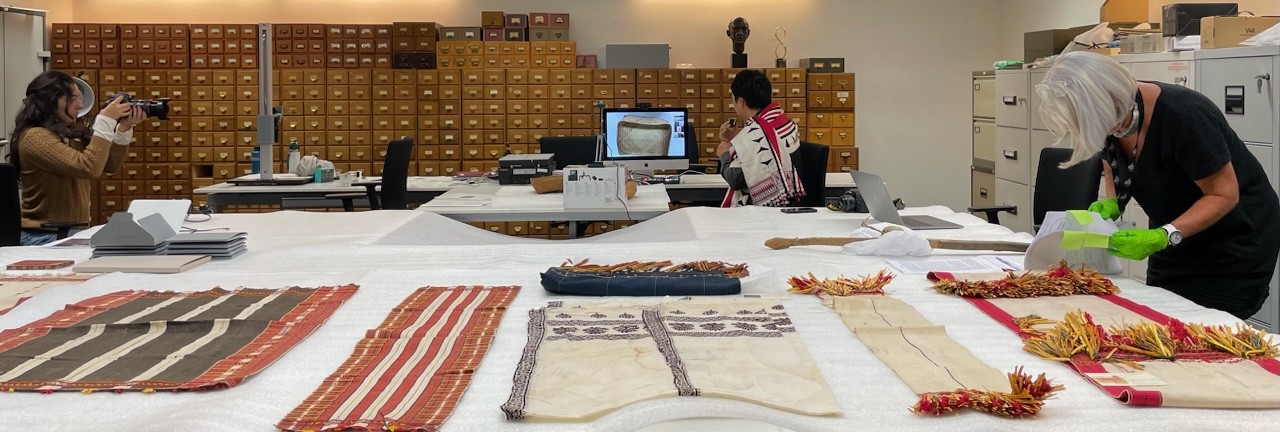
The Gaidinliu Collection has been carefully stored and conserved at the museum since the 1930s. The process of putting it on display in this exhibition began when Prof Arkotong Longkumer first visited the Pitt Rivers in 2005 and then again in 2014 to study Gaidinliu’s notebooks. In 2014, the museum created scans of them for him to take to India to share with members of Naga communities in northeast India. Prof Longkumer then expanded the concept into what became the DiMuse project, for which the entire collection was digitised in 2D and 3D formats.

The AHRC-funded DiMuse project was initiated by Prof Arkotong Longkumer, anthropologist at the University of Edinburgh, with Prof Clare Harris, anthropologist and curator at the University of Oxford, acting as Co-investigator. It was designed to explore the concept and practice of ‘digital repatriation’ with the Gaidinliu Collection as its focus. The project sought to engage with Naga communities in northeast India by sharing digital copies of the objects in the collection and collaborating with them to co-produce knowledge.

During the DiMuse project, consultations about the future of the Gaidinliu Collection were held with members of Naga communities in northeast India. The majority of respondents said that the collection should remain at the Pitt Rivers for the time being, but that they welcomed continued community engagement with it. To date, the museum has not received any requests to repatriate this collection.

The Pitt Rivers Museum holds the largest collection of Naga material in the world, much of it gathered by colonial administrators in the early twentieth century.

There are approximately 6500 Naga objects in the Pitt Rivers Museum, 898 of which are on display. The collections consist of a broad range of Naga material culture, including clothing, agriculture, archery, weapons, tools, figures, basketry, body arts, vessels and musical instruments. Most Naga objects came into the Museum between 1910-1940. The largest collections of items are those of James Philip Mills and John Henry Hutton, who were both members of the Indian Civil Service.

The Pitt Rivers Museum is keen to continue to work with communities to think and act collectively around the care of Indigenous objects in its collections, without foreclosing the difficult questions around how they were acquired. Maintaining relationships as equal partners with Indigenous communities is key to envisioning a shared future in which they are able to represent themselves in the world.

Acknowledgements

This exhibition would not have been possible without the generous support of the following: 

Project partners and members of Naga communities across northeast India

The Director of the Pitt Rivers Museum and the Head of the School of Divinity, University of Edinburgh

The Museum of Archaeology and Anthropology, University of Cambridge

The Arts and Humanities Research Council

Pitt Rivers Museum Curatorial Team: Alan Cooke, Josh Rose, Zena McGreevy, Arjunvir Singh, Kathy Clough, Shannon Cherry, Ellie Welch, Philip Grover, Louise Hancock, Joanna Cole, Jeremy Uden, Chris Morton, Clare Harris (DiMuse Co-Investigator)

DiMuse Research Team: Gaurav Rajkhowa, Lanchamei Monica Golmei, Thoizai Newmai, Mitheubuing Ngame, Tarun Bhartiya, Arkotong Longkumer (DiMuse Principal Investigator)

Photography/Digitisation: Nick Cistone, Ian Cartwright, Richard Smith