Museum as an aviary
Rosa Dyer's PhD research has focused on exploring relationships between people and birds through museum objects. During her Collaborative Doctoral Partnership with Birbeck, University of London, and the Pitt Rivers Museum, Rosa Dyer has produced and delivered in-person tours highlighting feathered friends and people's relationships to them, at this museum and also including birds on display at the Oxford University Museum of Natural History that sits just next door.
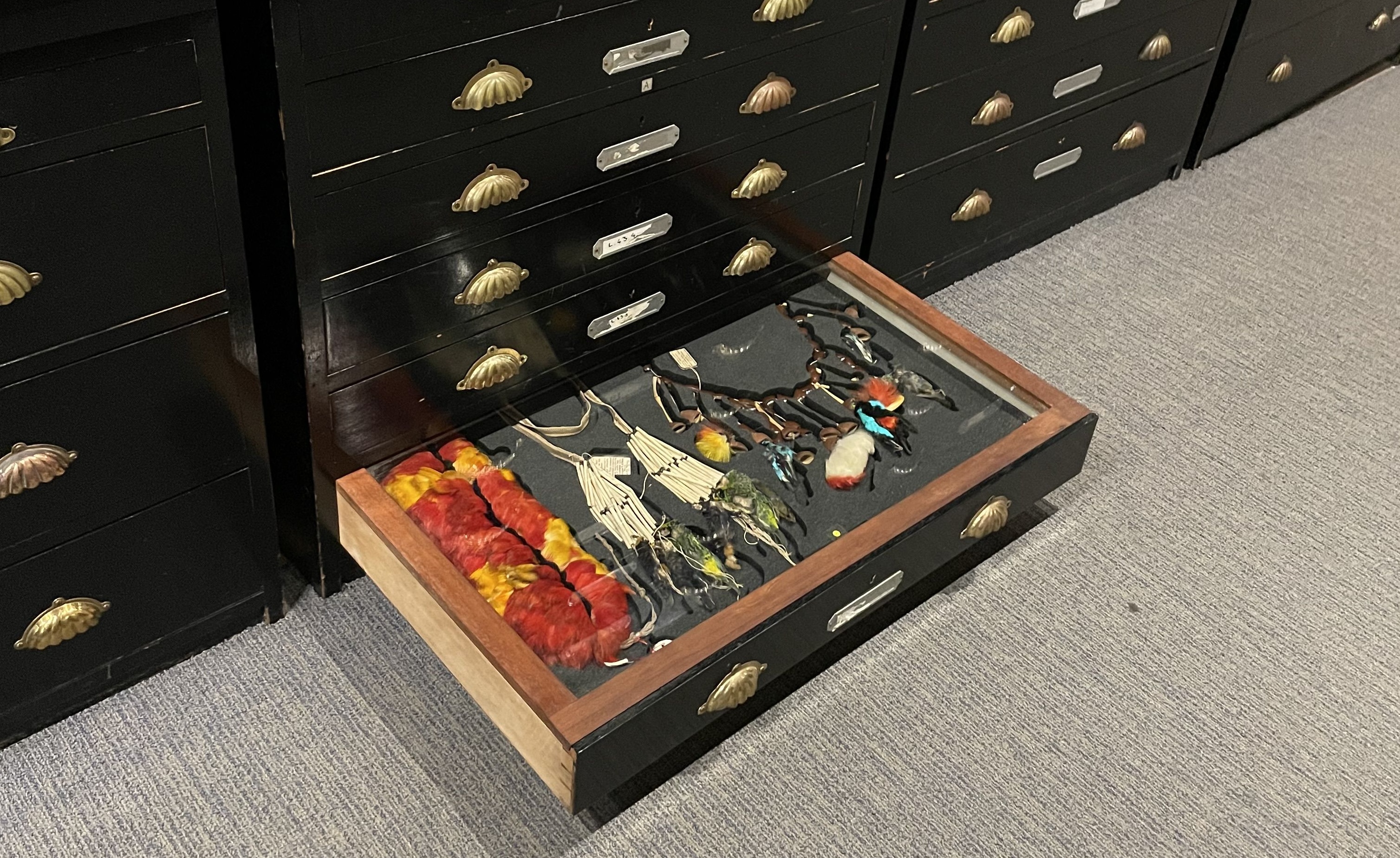
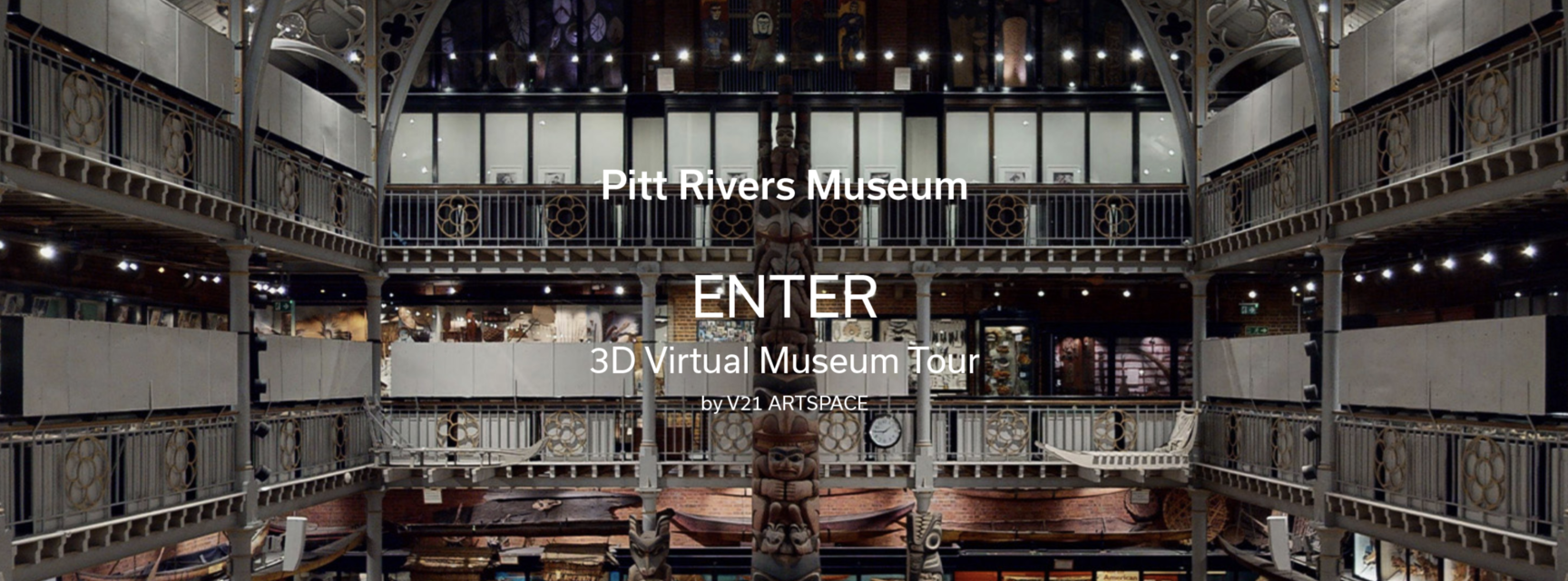
This webpage brings together content created for public audiences to share her doctoral research. Rosa also contributed content for the Pitt Rivers Museum's 360 degree Virtual Tour launched in 2024, with some of this content also featuring on gallery interactive on the First Floor of the Museum for from Summer 2025 to early 2026, next to a case themed on bird-related objects.
Here you can encounter various avian varieties in different ways, including a conversational podcast series and through two digital versions of these tour experiences recreated as a narrative multimedia guided virtual tour and a bird-spotting map interactive below:
Find out more about Rosa Dyer on her researcher page: Rosa Dyer Researcher
Listen
Rosa Dyer collaborated with Claudia Hirtenfelder for Season 6 of The Animal Turn podcast series. The first episode released in March 2026 looks at the Huia, a New Zealand songbird whose dimorphic beaks garnered the attention of science, fashion, and empire. Rosa uses the museum object to ask questions about how different knowledge systems value animals.
https://www.theanimalturnpodcast.com/museumobjects
Visit The Animal Turn podcast on their website here: Season 6 | Animals and Museum Objects/Collections
Guided Virtual Tour
This virtual guided tour recreates the content of physical tours delivered across the two museums between 2022 and 2025. The tours were delivered to a range of audiences, including members of the general public attending Late Night events and Research Spotlights, members of University of Oxford societies participating in termly seminar programmes, ornithological research groups, visiting researchers and undergraduate students. The tour starts by looking at a toucan, a South American bird diorama and scarlet ibis on display in the Oxford University Museum of Natural History, before heading through the door to look at collections in the adjoining Pitt Rivers Museum.
Experience the tour: Birds Between Nature and Culture
View the above tour in full screen at the Shorthand weblink here: Birds Between Nature and Culture