Thirty-nine Naga ancestors will soon begin their journey home from Oxford to Nagaland. This is the culmination of a Naga-led process of dialogue, research and reconciliation that began in 2020, supported by the Forum for Naga Reconciliation, in collaboration with the Pitt Rivers Museum, a process the Naga partners describe as not an ending but as a step on the longer path towards healing.
A Naga-led journey of return
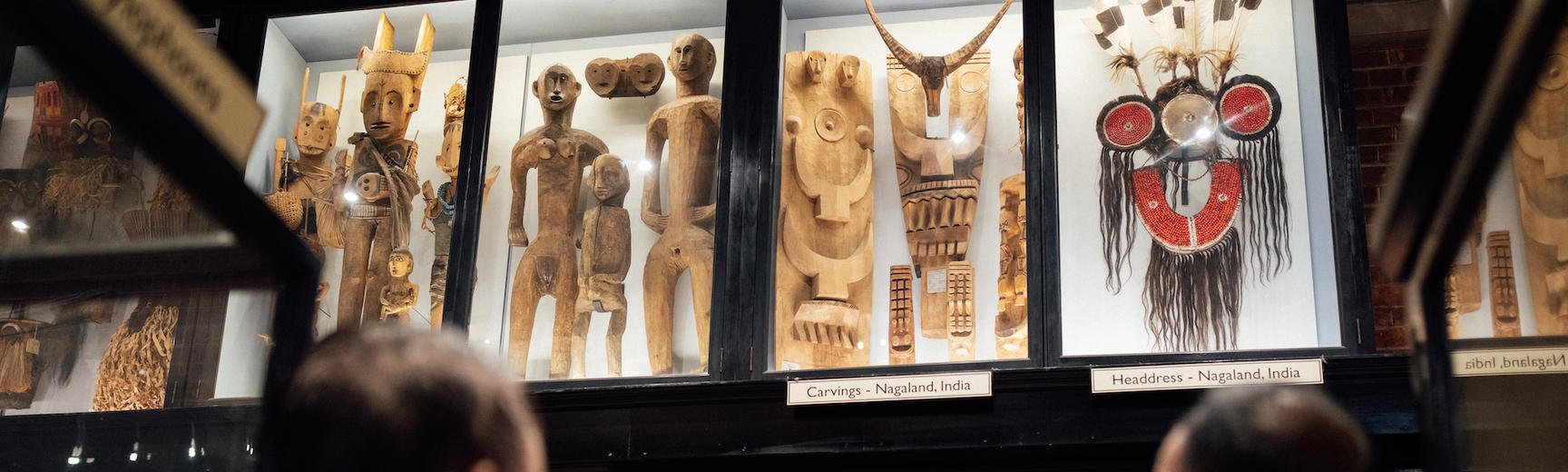
The Pitt Rivers Museum holds the largest collection of Naga material in the world, much of it gathered by colonial administrators in the early twentieth century. Among these collections are the ancestral remains of Naga people, taken during the colonial era and held in the Museum for decades, with some ancestors on display until recently.
In 2020 the Museum removed all human remains from display. That decision, and the wider commitment to change this move signalled, opened the door to a conversation that had not been possible before. Since 2020 the Museum has worked in collaboration with Naga partners, in particular the Forum for Naga Reconciliation (FNR) and its Recover, Restore and Decolonise (RRaD) team, together with tribal Hohos, elders, churches and communities across the Naga homeland to decide how their ancestors should be cared for and returned.
The ancestors and how they came to Oxford
The first Naga ancestral remains were given to the Museum over a century ago by John Henry Hutton, a colonial administrator in the Indian Civil Service and an anthropologist. Most of the Naga ancestral remains now in the collection were brought to Oxford by Hutton and a second administrator/anthropologist, James Philip Mills between 1910 and 1940 approximately. Whilst working as a colonial official, Mills wrote three monographs, which are written accounts of Naga culture and practices at the time.
However, we need to be aware that colonial 'collecting' was not the neutral, scholarly activity the word implies. In a forthcoming chapter, (Repatriation. Slowing, Caring and Witnessing: Naga human remains and the work of time Arkotong Longkumer, Dolly Kikon, Laura Van Broekhoven [in press]), the authors argue that 'collecting' was often bound up with the structures of colonial violence; remains and objects were frequently confiscated during punitive military expeditions, rather than freely given.
Mills provides a record of these activities during the Pangsha Expedition of 1936. He describes undertaking an expedition to the Pangsha village, primarily at the request of neighbouring Naga communities who were said to be being terrorised by Pangsha. Mills recorded, in The Pangsha Letters (Mills 1995), how he went with an armed escort to demand heads, which had been taken from a village. He also remarks that the Pitt Rivers Museum would "get some fine specimens" (see The Pitt Rivers Museum: A World Within, O'Hanlon 2014: 114).
Reflecting on the context here matters. The Nagas have consistently challenged the colonial framing of these heads as mere 'headhunting trophies' and evidence suggests that many of these were of loved ones who were cared for by clan and village members. Mills reports going to Pangsha to protect other villages but also arrives with an armed escort and a demand. His celebration of collecting "fine specimens" is embedded in the colonial structures of power. It is not a neutral act. We revisit these histories to acknowledge and honour those whose voices are silent and in the process, act as witnesses to their lives.
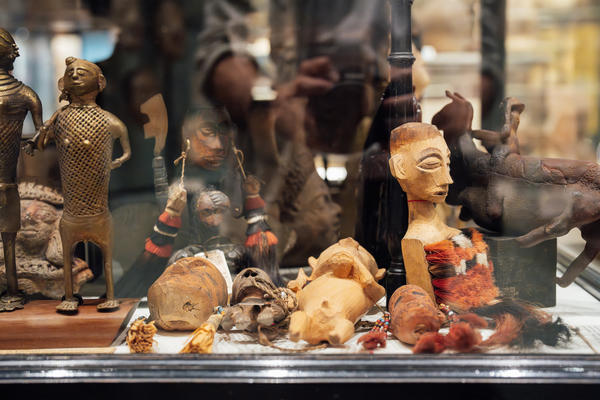
The Museum's wider Naga collection numbers several thousand objects. Within it, 219 items are listed as Naga human remains: 39 ancestral human remains (primarily skulls) and 178 objects that contain, or may contain, human hair. The current return concerns the 39 ancestors.
How the process unfolded
2020 - Removed from display and the first reconnection
After the Museum's 2020 decision to take all human remains off display received global coverage in the media, the Naga anthropologist Professor Dolly Kikon (a member of Nagaland's Lotha-Naga community, now at the University of California, Santa Cruz) contacted the Museum's Director, Professor Laura Van Broekhoven. Reading about the Museum's work on critical change and radical hope, she offered to connect the Museum with the Naga Nation to work towards healing.
2020-2021 - A Naga-led process takes shape
During the early months of the COVID-19 pandemic, the FNR and the Museum held a series of online conversations with Naga elders. In 2021 the FNR formed the RRaD team to carry out participatory research with Naga communities and the first Naga public lecture on repatriation and decolonisation was held in Dimapur. The FNR's role was that of a facilitator, enabling an inclusive, community-led Naga response, bridging tribal divides and making space for intergenerational reflection and a Naga philosophy of care.
March 2025 - An auction and a debate in Parliament
When an Oxfordshire auction house attempted to sell a Naga skull, the Museum and Naga partners worked together to stop the sale and Nagaland's Chief Minister Neiphiu Rio wrote publicly against it. Lord Boateng and Baroness Black subsequently led a House of Lords debate on preventing the sale and display of human body parts, a reminder of why the work extends beyond any single institution.
June 2025 - The delegation comes to Oxford
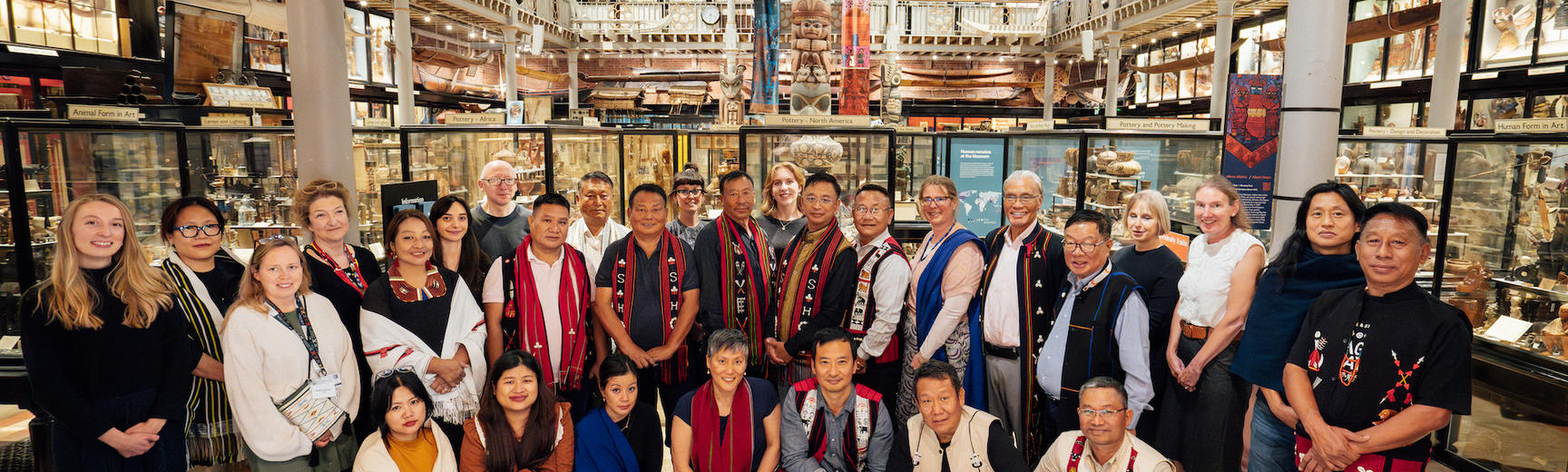
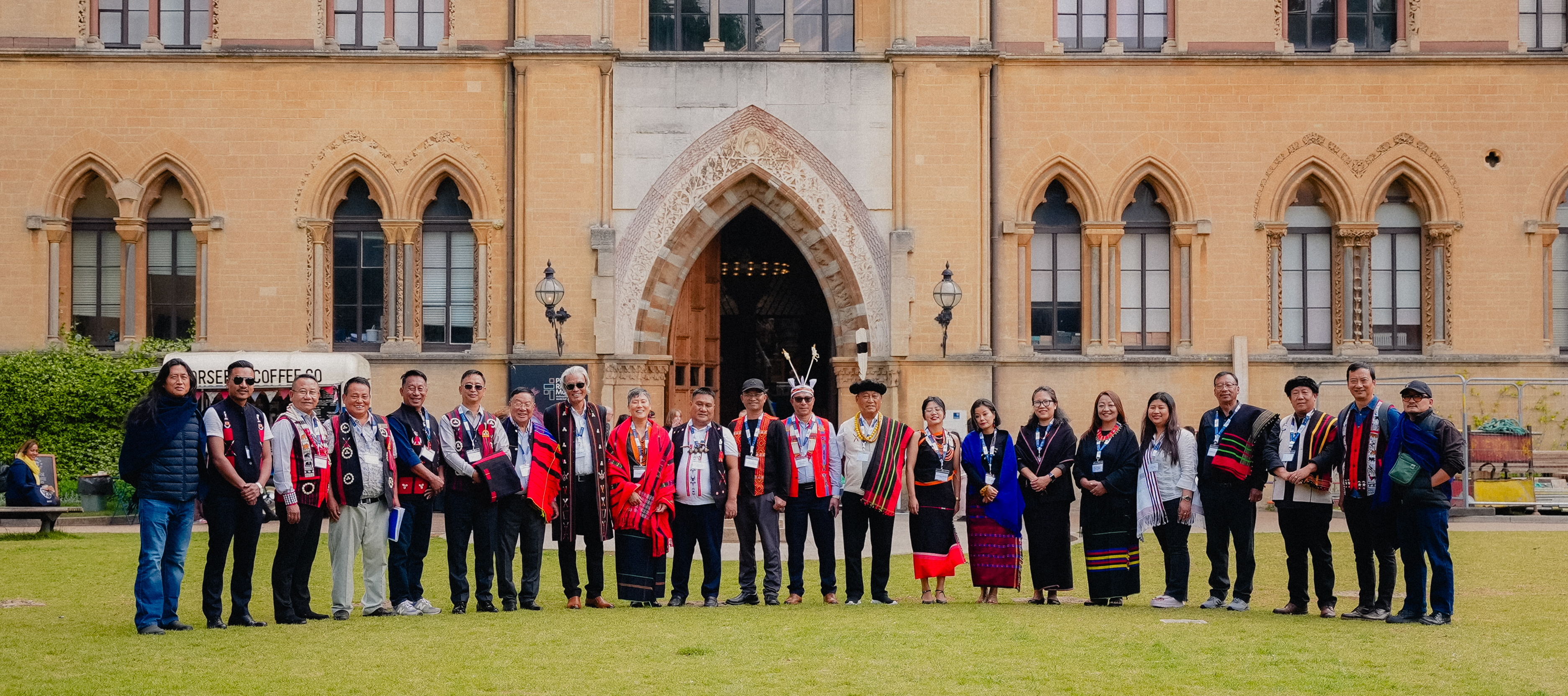
From 8-14 June 2025, the Museum hosted the first formal Naga delegation in its history, welcoming leaders and elders of several Naga tribe Hohos, together with members of the FNR and RRaD. The opening session on 9 June began with an Indigenous chant, Our Ancestor, shared by the FNR elder, Dr Visier Sanyü. The delegation was then granted access to the ancestral remains for the first time since their removal from display; Nepuni Piku invoked the Blue Sky Father and Mother Earth, announcing the delegation's presence to the ancestors and the delegates laid traditional shawls in homage.
It has been a long journey to get to this moment. We know that this week will be one where we will feel both grief and sadness when looking back on that past, and also where hope is possible as we work towards reconciliation and healing.
Professor Laura Van Broekhoven, Director of the Pitt Rivers Museum
A public session followed on 13 June in the Oxford University Museum of Natural History Lecture Theatre, with a closing ceremony of prayers and song, followed by a reception supported by the Centre for South Asian Studies at University of California, Santa Cruz. The delegation returned to Dimapur on 15 June.
June 2025 - The Naga-Oxford Declaration
On 13 June 2025, at the close of the visit, the Naga declaration presented the Naga-Oxford Declaration on Repatriation - a unanimous, intertribal statement, made in a united voice by the tribe Hohos with the FNR and RRaD. It is the founding text of the return and reads in full:
The Naga-Oxford Declaration on Repatriation
- We are grateful to our ancestors for being a testament and silently proclaiming the stories of our people.
- We are sorry that it has taken us several decades but we are here now to reclaim and return you to the homelands from where you were taken.
- We are committed to the process of your return from museums.
- We acknowledge that this Repatriation process is towards the healing and wholeness of the Naga people.
- As Nagas, we do so in a united voice, with mutual respect and consensus and to offer you a dignified rest, establishing a Naga monument of healing and peace for all generations, symbolising the oneness of the Nagas.
- We extend our solidarity to fellow Indigenous Peoples across the world who seek to undertake a similar journey of repatriation in the hope of bringing decolonisation, justice and peace, not just for ourselves but for humanity.
July 2026 - The University of Oxford Council decision
Following the formal claim, the University of Oxford Council, at a meeting on 13 July 2026, agreed to the return of 39 ancestral human remains, declining the return of one further remain which does not have a clear provenance as Naga. The Director confirmed the decision in writing to the FNR, expressing the hope that the work of bringing the ancestors home could now begin.
The homecoming
Following this decision, the Pitt Rivers Museum has been working closely with the Nagas to agree a date for the repatriation, when the Museum will host a Handover Ceremony marking the return of the ancestors, who will finally travel home to Nagaland. A visit by a Naga delegation is being planned to Oxford to accompany the ancestors home. The homecoming is made possible with the support of the Homebound Project.