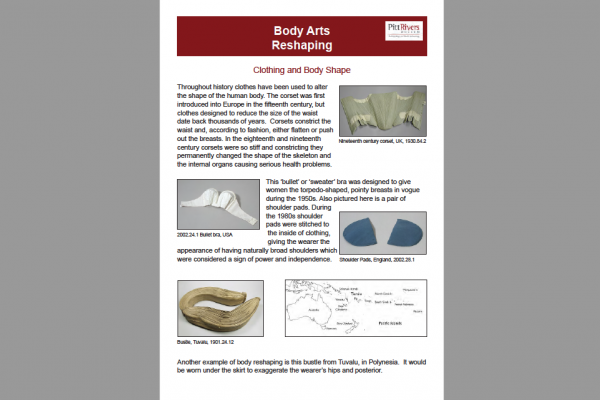
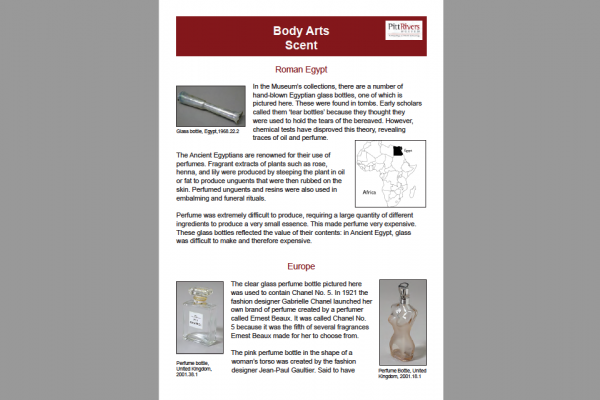
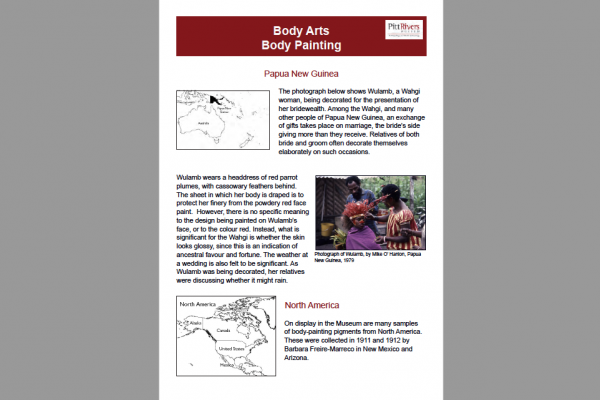
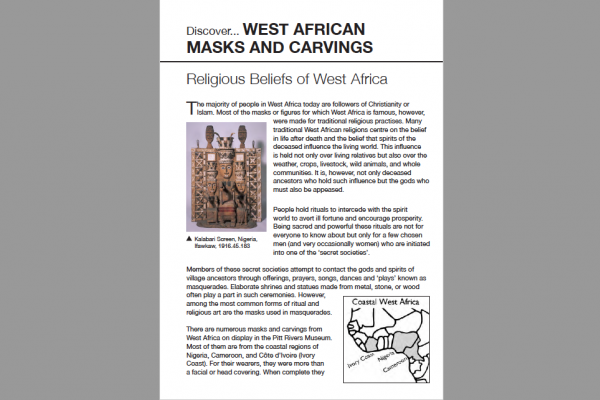
Body Arts - Uli

Traditionally, the women of the Ibo people of Nigeria painted their bodies with patterns. They used a dye made from the seeds of uli plants that temporarily stained the skin black. This type of body decoration is known as uli painting. Uli designs refer to plants and animals; some are also based on objects used in ritual and everyday life.
This painting is of a woman covered with uli designs that were worn by girls
who had just left a ‘fattening room’. Fattening rooms are where young women
were secluded in preparation for marriage. The period of seclusion usually
lasted about three months. During this time young women were instructed on
sexual, religious, and 
Uli painting, Nigeria;
1972.24.172domestic matters and taught how to be good wives and
mothers. They were also fed rich fatty foods supplied by their families and
sometimes by their future husbands. They were also kept sedentary in order
to gain weight, because fat is a sign of health, wealth, and fertility. When
girls were ready to leave the fattening room their bodies were painted with
uli so that they could be presented to the community at the height of their
beauty.
Uli designs emphasize the girl’s best features and highlight her physical strength. Physical strength was important because it meant the girl was able to work hard for her husband and family. The designs are often concentrated around the neck because a long straight neck was considered beautiful and strong. They also draw attention to the pubic hair, which is a sign of strength and fertility. When uli is drawn on the legs it emphasizes beauty and strength. Men were only painted occasionally with much simpler designs than those shown here.
Uli dye is made from uli seed pods. Before uli is applied the body hair
is shaved off to make a smooth surface. Then a red powder is rubbed on to
the skin. This red powder stops the skin from sweating so that when the paint
is applied the dye will not smudge. The uli designs are then drawn freehand
on to the body using metal tools.When the dye is first applied it is a greenish
colourbut overnight it turns black and the designs stand out clearly against
the red 
Cushion cover, Nigeria; 1972.24.16powdered skin. When the dye has dried, oil is applied to the skin
to make it soft and shiny. The uli dye remains visible for about four days.
When this drawing was made in the 1930s and 1940s, Ibo women often wore uli painting on everyday occasions as well as during important festivals. At the same time missionary schools were discouraging women from painting uli on their bodies and instead taught them to embroider the designs on textiles. Uli artists were asked by missionaries to record their designs on paper. These were then used to make templates for the embroideries.
Further Resources
Body Art Collections at the Pitt Rivers: A website exploring the Body Art collections at the Pitt Rivers Museum. Here you can find out more about the objects on display in the Museum, about the themes of the displays, and about the people who made and used the objects.
Further Reading
Detailed information about each of the objects on display is provided in the Body Arts Gallery.
Sources
ADAMS, SARAH, ‘Praise Her Beauty Well: Ùrì from the Body to Cloth’, in Call and Response: Journeys into African Art, New Haven: Yale University Art Gallery (2000), pp. 9–44.
WILLIS, LIZ, ‘Uli Painting and the Igbo World View’, in African Arts, Vol XXIII, no 1 (1999), pp. 62-67.
The objects featured in this introductory guide can be found in the following location:
Lower Gallery (First Floor) L46B
Introductory guide compiled by:
Jennifer Peck, Project Assistant, DCF Redisplay Project ,2002
Introductory guide revised by:
Bryony Reid, Senior Project Assistant (Interpretation), DCF What’s Upstairs? October 2005
Download print version of the Body Arts Uli introductory guide
(to view pdf files Acrobat Reader is required)