Japanese Noh masks
History of the Noh theatre

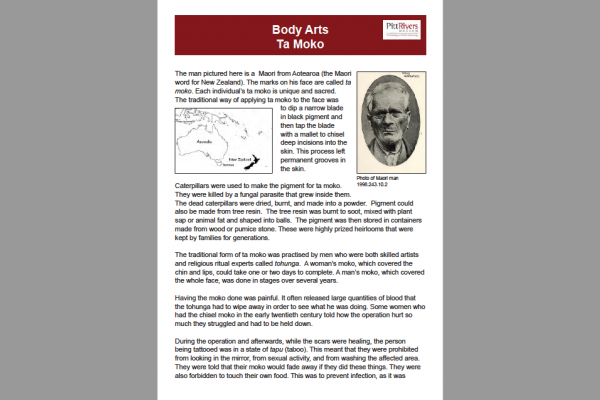
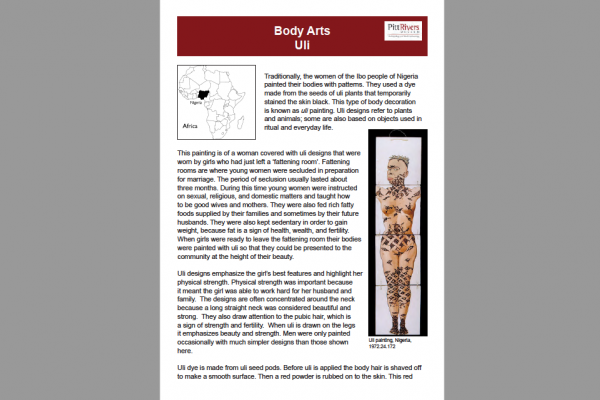
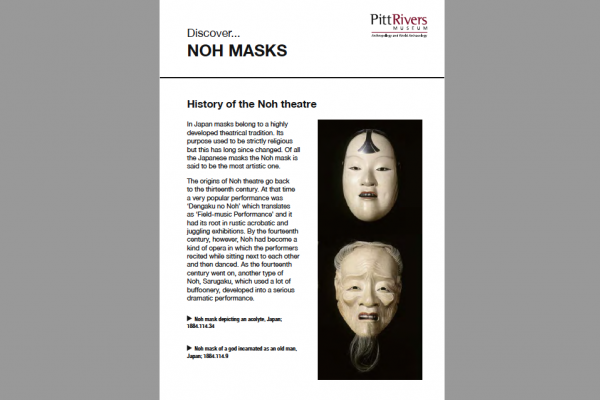
Noh mask of a god
incarnated as an old
man, Japan;
1884.114.9
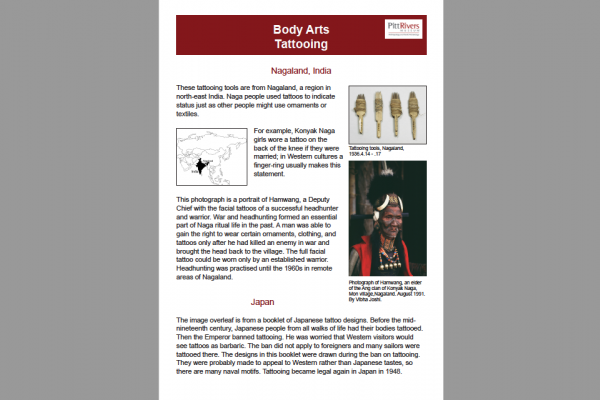
Noh mask depicting an
acolyte, Japan;
1884.114.34In Japan masks belong to a highly developed theatrical tradition. Its purpose
used to be strictly religious but this has long since changed. Of all the
Japanese masks theNoh mask is said to be the most artistic one. The origins
of Noh theatre go back to the thirteenth century. At that time a very popular
performance was 'Dengaku no Noh' which translates as 'Field-music Performance'
and it had its root in rustic acrobaticand juggling exhibitions. By the
fourteenth century, however, Noh had become a kind of opera in which the
performers recited while sitting next to each other and then danced. As the
fourteenth century went on, another type of Noh, Sarugaku, which used a lot
of buffoonery, developed into a serious dramatic performance.
In 1647 the shogun Tokugawa Iemitsu (the Shogun was the Japanese military ruler) ordered that no variations were allowed in Noh performance. At that time stage directions were written down, costumes and masks were clearly defined and actors were allocated fixed positions on stage.
Masks and other
stage accessories in Noh theatre

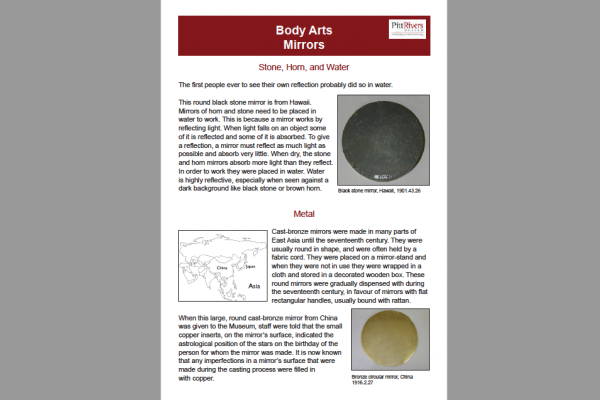
Carved and painted signature on the reverse
of one of the masks
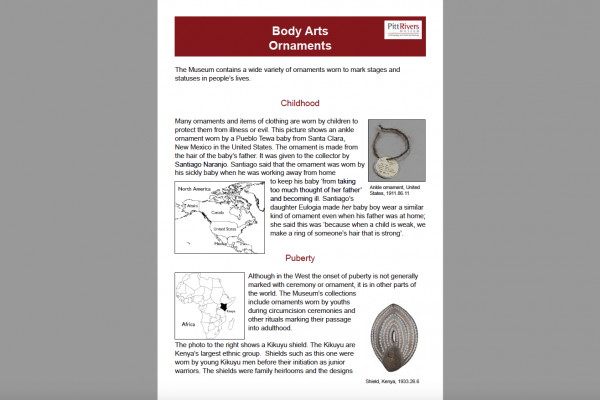
Lacquered reverse of a Noh mask of a
thin old man. Extra wood has been
carved from the nose area and dark
blue fabric added on the right, possible
to improve the mask's fit for the wearer,
Japan; 1884.114.24
Elaborate costumes are a very important part of creating a striking performance.
If a play begins rather slowly it is likely that the audience will get bored,
therefore the Noh actors choose bright and colourful costumes. Costumes can
also help to communicate a special context, so a broad-brimmed hat made of
bamboo would suggest country life. These expensive costumes were often gifts
to a famous actor by his admirers, something that still happens today.
Stage props on the other hand were hardly needed at all. More important
than the 
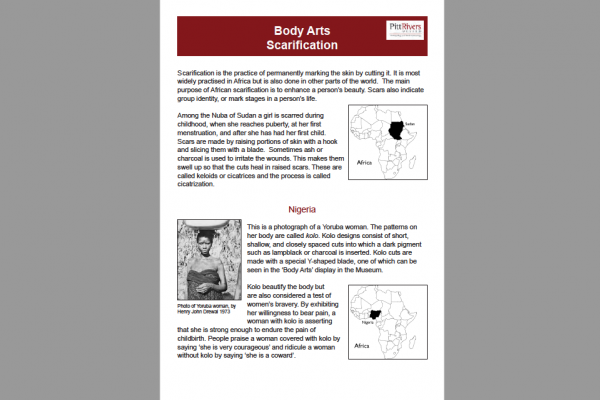
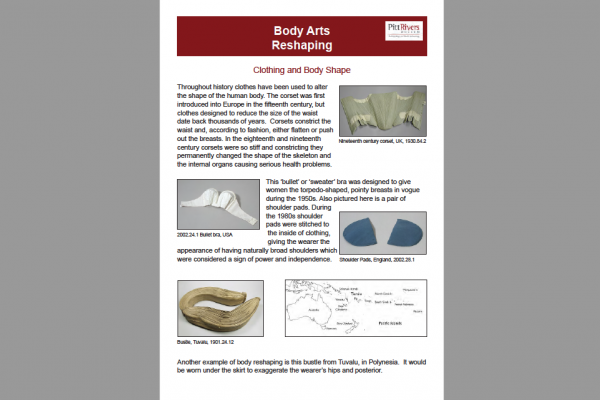
Horned Noh mask of
Hannya an angry
female spirit, Japan;
1884.114.56costume was the Noh mask. Masks are onlyworn by the main character,
his mask would stylise the person it represents and show them in a truer
light than reality could do by depicting only the absolutely essential traits
of character. There are five categories of Noh masks: gods, demons, men,
women and the elderly.
The masks used in Noh theatre generally show a neutral expression so it is up to the skill of the actor to bring the mask to life through his acting. The parts are all acted by men, so the task of performing as a young woman is one of the most challenging for any actor. The masks are comparatively small and they only cover the front of the face having only small holes for eyes, nostrils and mouth.
![]()
Gregory Irvine describes the dressing of an actor in his book as follows: "After donning his sumptuous costume the actor seats himself before a mirror and studies the mask, becoming one with the character he is about to perform. The mask is then tied onto his head, any wig or necessary headgear is put on and he stands before a full-length mirror letting the mask take over his own personality before he is led to the stage."
![]()

Japanese netsuke carved masks, similar to the one
above (1932.32.41), can be seen on the Lower
Gallery (first floor). 1911.86.11
Noh masks have to be very light because they are worn throughout a performance
that lasts for several hours. They are carved from one piece of cypress wood.
After the masks has been carved to the desired thickness, holes for eyes,
nose and mouth have been cut, it is then coated with layers of gesso mixed
with glue. This coating is then sanded down, giving the mask its final shape.
Finally it is painted in the colours prescribed for the particular character
and some parts of it might be gilded. Some of the masks' eyes are inlaid
with metal leaving a tiny hole. The hair and the outlines of the eyes are
traced with black ink.

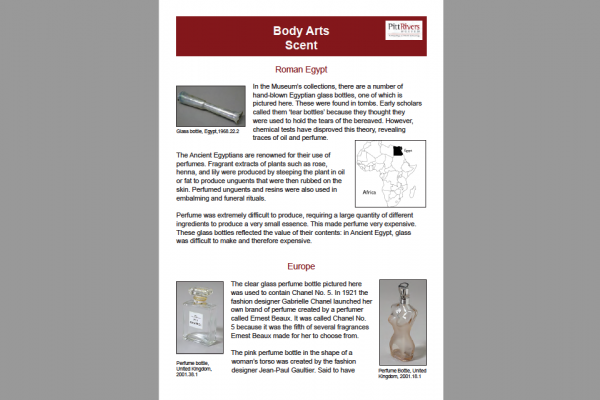
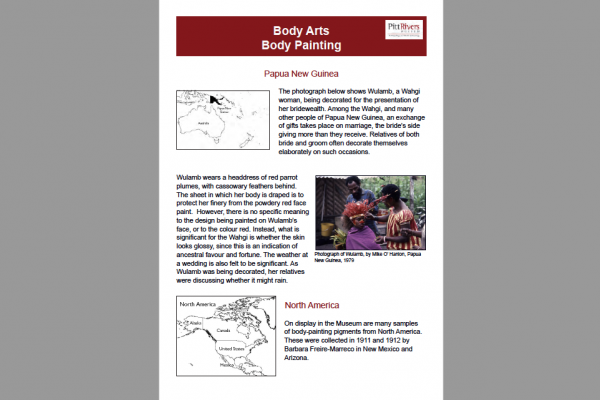
Detail of the Noh Mask display in the Court (ground floor)
of the Museum.
Noh masks on display in the museum
The Pitt Rivers Museum has a collection of 54 Noh masks. It is a complete set from the North East of Japan, bought from a theatre in Tokyo probably in the 1870s. Buddhist priests made them in their leisure time. One of these was Zekan, who lived in the early Edo period, about 400 years ago. The masks in this collection are all from the Edo period (1600-1867), with singular masks dating from the early 17th until early 19th Century. The style of these masks has barely changed in several centuries.
Further reading
Irvine, Gregory (1994) "Japanese Masks: Ritual and Drama". In: Mack, John (ed.) (1994) Masks. The Art of Expression. London: British Museum Press. pp.130-150.
Waley, Arthur (1921; 1965 4th impr.) The No Plays of Japan. [With letters by Oswald Sickert] London: George Allen and Unwin Ltd.
The objects featured in this Introductory guide can be found at the following locations: ![]()
Court (ground floor) – Case no. C3A – Masks
Lower Gallery (first floor) – Case nos. L91-96 B & C – Netsuke
Compiled by: Julia Nicholson, Joint Head of Collections, 2002
Revised by: Kate White, Head of Visitor Services & Public Affairs, 2011
Download pdf version of this introductory guide - Noh Masks
(to view pdf files Adobe Reader is required)