Methods of Firemaking
History and technology
Fire has many uses, both ritual and practical, and plays an important
role in our lives.In Africa, evidence for deliberate exploitation of natural
fires may date back as far as 1.5 million years ago.From these early beginnings,
humans developed the skills and equipment necessary to make and sustain fire.

Kamba fire drill, Kenya,
PRM 1928.48.3.1-.2Fire-making objects in the
Pitt Rivers Museum demonstrate these technologies. They show how methods still
used today have ancient origins and similar utensils are used in many different
places. The collections exhibit three different but not entirely distinct fire-making
methods: Firstly, objects using friction; secondly, tools that create sparks;
thirdly, techniques employing chemicals.
Fire from friction
Many peoples use the friction of drilling or sawing sticks to create fire. One wooden stick (the drill, plough or saw) is twisted or rubbed against another (the hearth). This motion generates heat and kindles dry materials (tinder) placed where the two objects touch. Substances like grit are often placed at the point of contact to create extra abrasion. This method is employed all over the world. Because the principle behind all fire sticks is the same, the objects look very alike. For example, those used in the early 20th Century by the Kamba people of Kenya look similar to those made in the same period by the Kota of the Nigiri Hills, India. The Museum’s displays also feature an Ancient Egyptian hearth stick dating to around 4,000 years ago. This indicates the long history fire sticks.

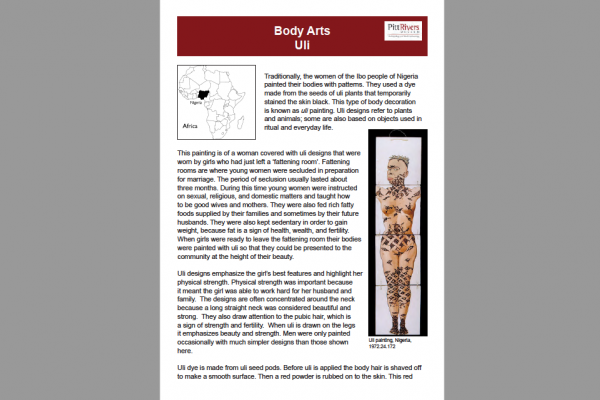
Kota fire drill, Tamil Nadu, India
PRM 1919.26.3 .1& .3We can identify slight differences in technique. The simplest sets use
two sticks operated by the hands, as with the Kota of Tamil Nadu, or by the
feet, as with those used by Lhota Naga people from the Naga Hills, India.
The more elaborate ‘bow’ and ‘thong’ drills utilise cords or straps that
are pulled back and forth to speed up the movement of one stick against the
other.
Sparking a flame
Naga Tinderbox Nagaland, India
PRM 1928.69.43.1 - .4All over the world people light fires with sparks
caused by striking flint and metal together. 
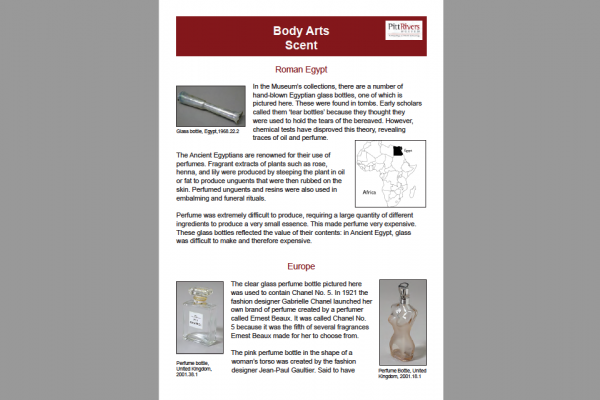
Hausa or Fulani tinder pouch, Nigeria
PRM 1923.36.32 .1 - .3A kit includes flint, steel (or
another metal), and tinder, usually carried in a container designed to keep the
contents dry. With this method, creating fire can take up to 30 minutes, most
difficulties resulting from wind or damp tinder. Neolithic (10,000 - 4,000 years
ago) sparking flints are the earliest evidence for humans lighting, rather than
simply controlling, fires. The Museum’s displays feature a 2000-year-old Iron
Age iron pyrite nodule from Cissbury Hillfort in West Sussex, England. Along
with flint, this was probably used to light fires.

Brass tinder box and belt, northeast India
PRM 1886.1.415 .1- .3Containers for the kit vary enormously depending
on whom they belong to and where they have been made.In Asia they were often
suspended from the waist, as shown by a 19th Century Indian brass box that hangs
from a belt. Elsewhere in India, the Lhota Naga covered their vessels with skin
from goat’s testicles. A soft leather pouch made by a Hausa or Fulani craftsman
for use in the hot climate of Nigeria contrasts with a well-sealed enamelled
box from the damper climes of St. Petersburg, Russia. These objects show the
variety of styles and materials favoured by different cultural groups as well
as the extent of a worldwide technology.
Chemically aided fire

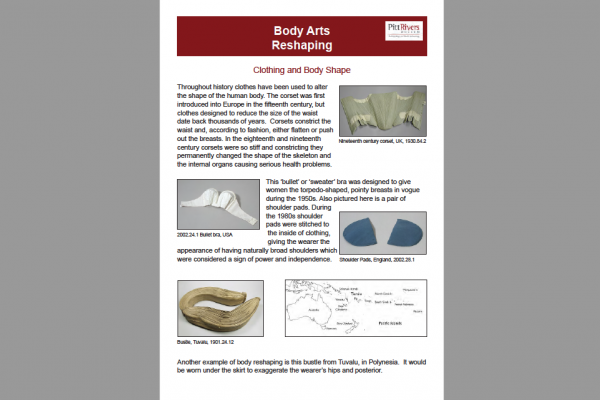
Tinder pistol, England
PRM 1938.35.1101Many chemical reactions generate heat and fire and various
chemically aided fire-making methods exist. Friction and sparks still start the
reactions but chemical compounds ease the process. They combat problems of wind
and damp tinder, and reduce physical effort. To begin with these involved producing
enhanced tinder. For example, amadou, a fungus that grows on decaying trees,
was mixed with saltpetre (potassium nitrate), and used with sparking kits and
in tinder pistols, a 17th Century invention. In the 19th Century further chemicals
and mechanisms were developed. For example, the Museum’s displays feature an
English lighter that used stearin, a compound of purified fatty acids.
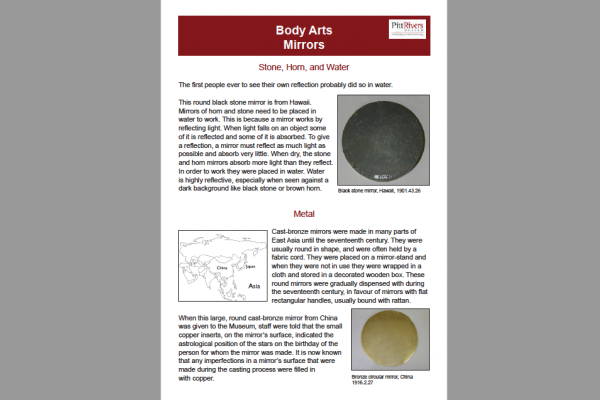
Matches are a more familiar chemical fire-making method. English chemist John Walker invented the friction match in 1827.

Beswick Stearin lighter, London, England
PRM 1938.35.1183There are now two types, ‘strike-anywhere’ matches and
safety matches, both of which use phosphorus. Heads of strike- anywhere matches
contain the chemicals needed to produce fire from frictional heat. Safety matches
need a special striking surface that causes match heads to ignite. Matchboxes
are used to keep matches dry and provide a striking surface. The Museum displays
a number of boxes including a British one dating to the 19th Century, which features
a mechanism to grip and ignite matches. In many parts of the world gas lighters
have superseded friction matches as the main fire-making technique.

Further reading and resources
A. J. Cruse. 1946. Matchbox Labels of the World. London: Robert Ross & Co.
Ltd
Christy Miller. 1926. Bryant & May Museum Catalogue: The Bryant and May Museum
of Fire- Making appliances: Catalogue of the Exhibits. London: Bryant & May
Ltd.
William T. O’Dea. 1964. Making Fire: A Science Museum Illustrated Booklet. London:
HMSO
The
objects featured in this Introductory guide can be found at the following
locations:
Court (ground floor)
Case no. C133A, C133B, C134A, C134B, C135A, C135B – Methods
of Firemaking![]()
Download pdf version
of
this introductory guide
(to view pdf files Acrobat
Reader is required)