Animals and Belief
Ancient Egyptian Religion
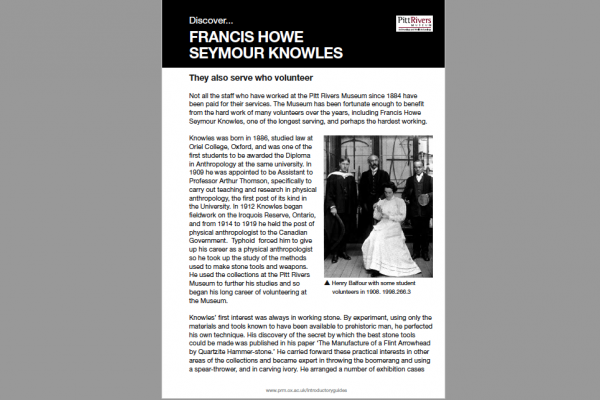
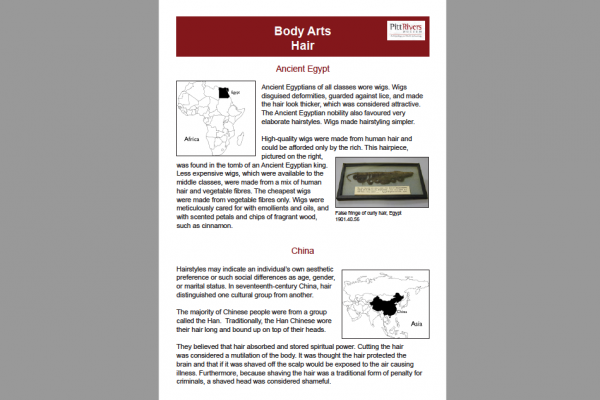
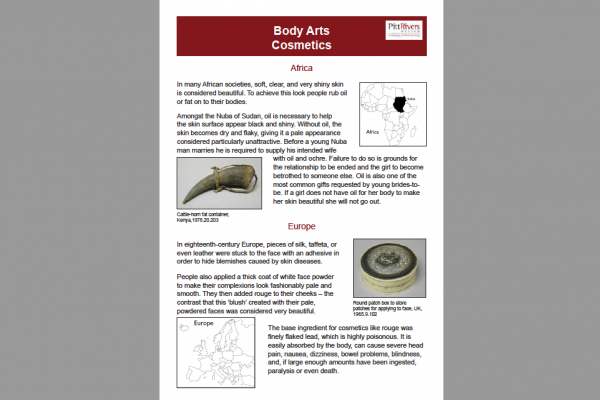
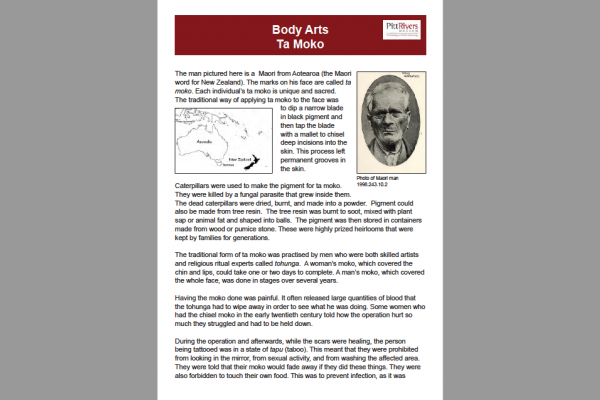
There was no single, unified system of religious belief in Ancient Egypt. There was a wide and unsystematic collection of beliefs and practices, which varied by location, social class, and over the 3000 years generally referred to collectively as ‘Ancient Egypt’. Indeed, there is evidence that the practices of the poor would have been quite different to those of the wealthy, ruling class. The role of animals in Ancient Egyptian religion is complicated by all of these factors.
Animals and Religion
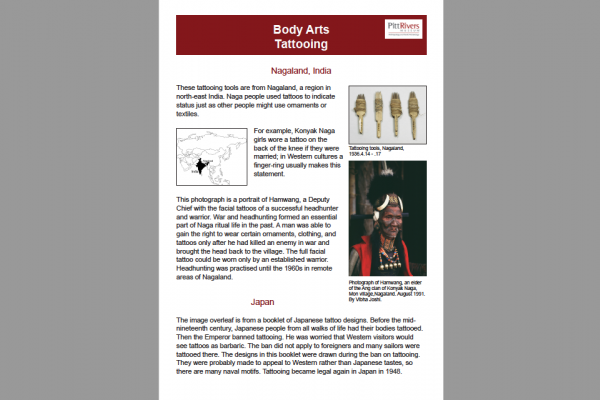
Animals were used in Ancient Egyptian religious art to illustrate characteristics
of the gods. However, the Egyptians did not worship animals and the depictions
were not literal. For example, Horus was depicted as a falcon because he
was believed to have falcon-like qualities, not because he was thought to
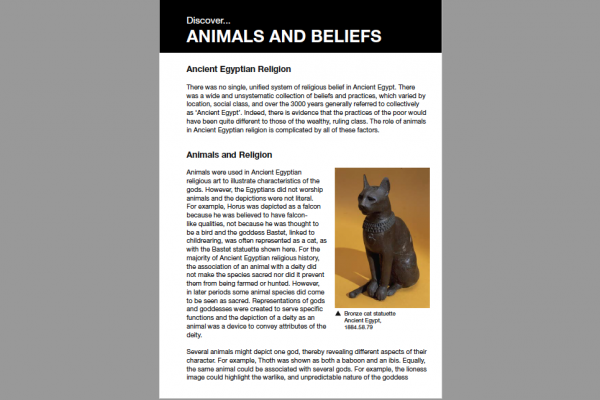
be a bird and the goddess Bastet,linked to childrearing, was often represented
as a cat, as with the Bastet statuette shown here.For the majority of Ancient
Egyptian religious history, the association of an animal with a deity did
not make the species sacred nor did it prevent them from being farmed or
hunted. 
Bronze cat statuette Ancient Egypt, PRM 1884.58.79However, in later periods some animal species did come to be seen
as sacred. Representations of gods and goddesses were created to serve specific
functions and the depiction of a deity as an animal was a device to convey
attributes of the deity.
Several animals might depict one god, thereby revealing different aspects of their character. For example, Thoth was shown as both a baboon and an ibis. Equally, the same animal could be associated with several gods. For example, the lioness image could highlight the warlike, and unpredictable nature of the goddess Sekhmet but could also reveal the fiercely protective, gentle mothering aspects of the godesses Bastet, Mut, and Hathor. Gods that were sometimes shown in animal form were also often depicted as human, part-animal, heavenly bodies, inanimate objects, or were indicated simply by their name in hieroglyphs
Animals Cults
Animal statues and images were used both as a focus for rituals and as
physical manifestations of deities. For a few gods, cults developed where
living animals became the focus of worship, fulfilling the same function
as artistic representations. The best-known example is the Apis Bull, which
was believed to act as a physical receptacle for the non-physical essence,
the ba, of the god Ptah. There was only one Apis Bull at any time. While
alive it formed the focus for the worship of Ptah at his temple in Memphis,
the ancient capital of Egypt located near modern Cairo. When it died the
bull was mummified, buried with great ceremony, and another bull was selected
to take its place.
Between 3000 and 2000 BC major changes took place in Ancient Egyptian society,
including many to popular religion. The link between a species of animal
and the cult of a particular god became much stronger than it had been in
earlier times. The animals linked to some gods came to be viewed as sacred.
Herodotus, a Greek who visited Egypt before 2400 years ago, stated that anyone
who intentionally killed a sacred animal was put to death. Even accidental
killings could be punished. This resulted in examples of extreme behaviour,
such as the account by Diodorus of a Roman visitor who accidentally killed
a cat and was lynched by an angry mob despite the Pharaohs attempts to intervene.
Animal statues and mummified animals were donated as votive offerings to
the deity they represented or to which they were linked.
Mummification of Animals
The Ancient Egyptians mummified animals for three main reasons. A few animals
were beloved pets mummified by their owners, perhaps in the hope that they
could join them in the next life. Some animals were mummified and placed in
tombs to provide a food source for the deceased in the next life
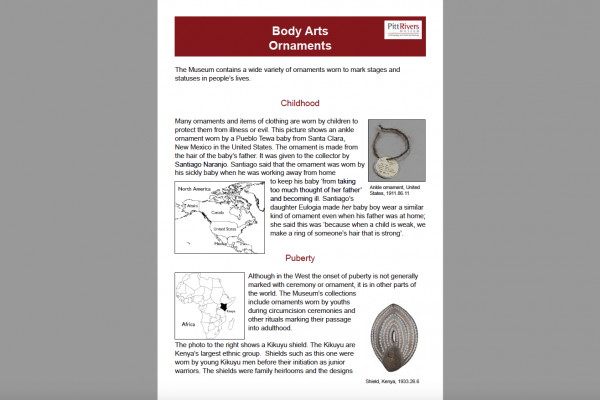
Mummified crocodile, ancient Egypt PRM 1908.64.4. However,
the majority of animals were mummified for religious reasons unconnected with
human burial. The belief that certain species were sacred led to large numbers of
animals being kept at temples. Visitors to the temples were able to pay for
the mummification of an animal. In return, the visitor hoped to receive the
favour of the god. For example, cats were sacred to the goddess Bastet who
was closely linked to childbirth and rearing children. The offering of a mummified
cat at her temple might have been thought to help with childbirth or protect
a child. It was also believed that these mummified animals could reveal the
future and deliver answers to particular problems. The god Sobek was associated
with the crocodile and mummified crocodiles like the example shown on the
previous page were offered in a similar way. A whole industry grew up around
these animal cults, with animal keepers, animal embalmers, priests tending
to pilgrims, and labourers building the cemeteries and catacombs in which
thousands of these animals were buried.
Cats in Egyptian Religion
The cat was domesticated in Egypt between about 4000 and 3500. Once domesticated,
cats were valued both as house pets and as killers of vermin but were not
immediately linked to any particular deities
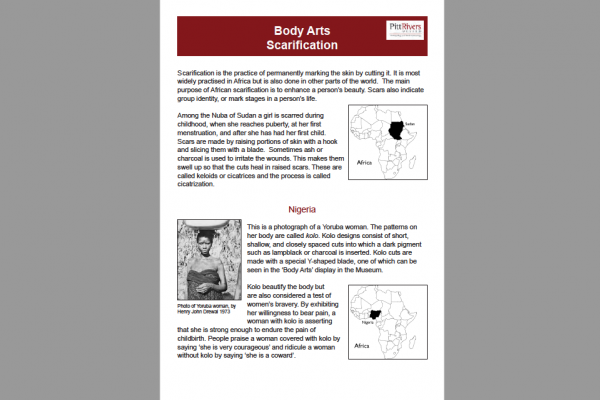
Mummified cat, ancient Egypt
PRM 1884.57.5. The protective aspect of the
vermin-catching cat soon gave it a place in the everyday religion of ordinary
people. Over time these characteristics led to associations with several
gods. The male cat became closely linked to the sun god. The female cat,
the image of the goddess Bastet, seems to have been closely linked to fertility
and child rearing concerns. Statues of Bastet as a cat-headed woman often
show kittens at her feet. Bastet rose to great prominence between 3000 and
2000 years, forming part of the general increase in animal cults. Representations
of the goddess Bastet provide a good example of the fluid and complex nature
of the role of animals in Ancient Egyptian religion and society.
Offerings of cat statuettes and mummified cats, as shown here, were presented
at temples. Some of the cat-shaped statues were actually elaborate coffins
designed to hold mummified cats. Cat cemeteries filled with these mummies
have been found throughout Egypt, for example at Bubastis, Saqqara, Thebes,
and Beni Hasan. In apparent contrast to the prohibition against killing cats,
it does not appear that these mummified cats were old house pets, preserved
after their natural deaths. Modern x-ray evidence shows cats were deliberately
killed, often while still quite young, suggesting that the cats were bred
specifically for this purpose. At least in part, these practices seem to
have been encouraged by Egyptian rulers for economic reasons. The ‘sacred
animal industry’, supplied considerable employment and also provided tax
income to the Pharaohs.
Further Reading and Resources
John H. Taylor. 2001. Death and the Afterlife in Ancient Egypt. London:
British Museum Press.
Malek, Jaromir. 1993. The Cat in Ancient Egypt. London: British Museum Press.
The objects found in this introductory guide can be found at the
following locations:
Court (ground floor)
Case 143A - Animal Form in Art
Case 7A Treatment of the Dead – Ancient Egypt, Peru and Chile
![]()
Compiled
by: Ollie Douglas DCF Court Project, 2002–03
Download the Animals and Belief introductory guide (pdf)
(to view pdf files Acrobat
Reader is required)