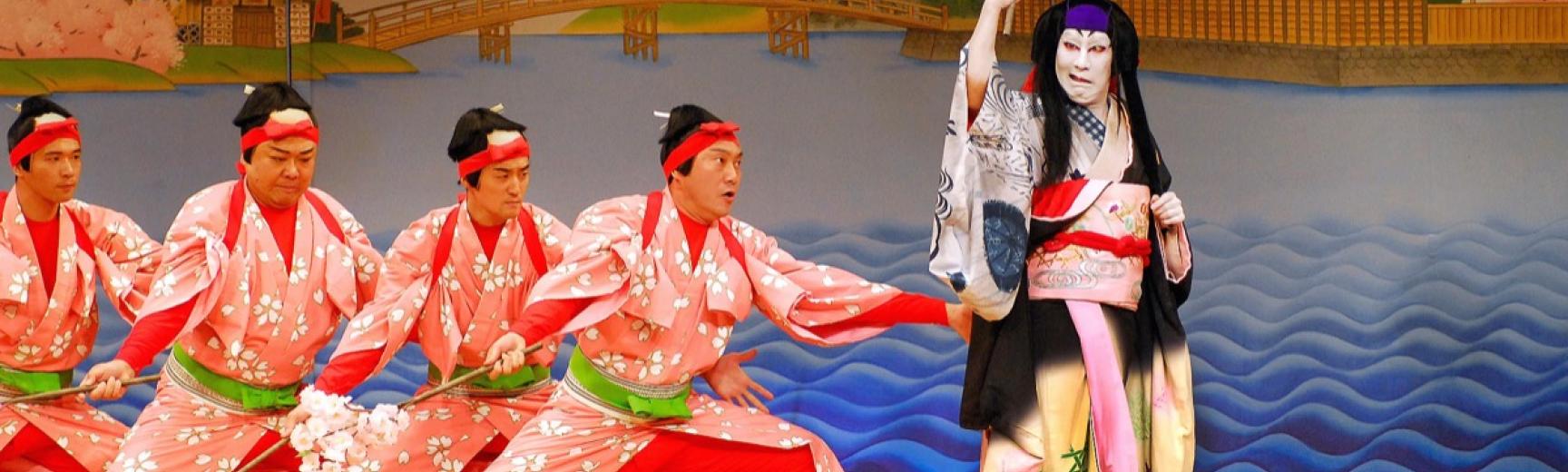
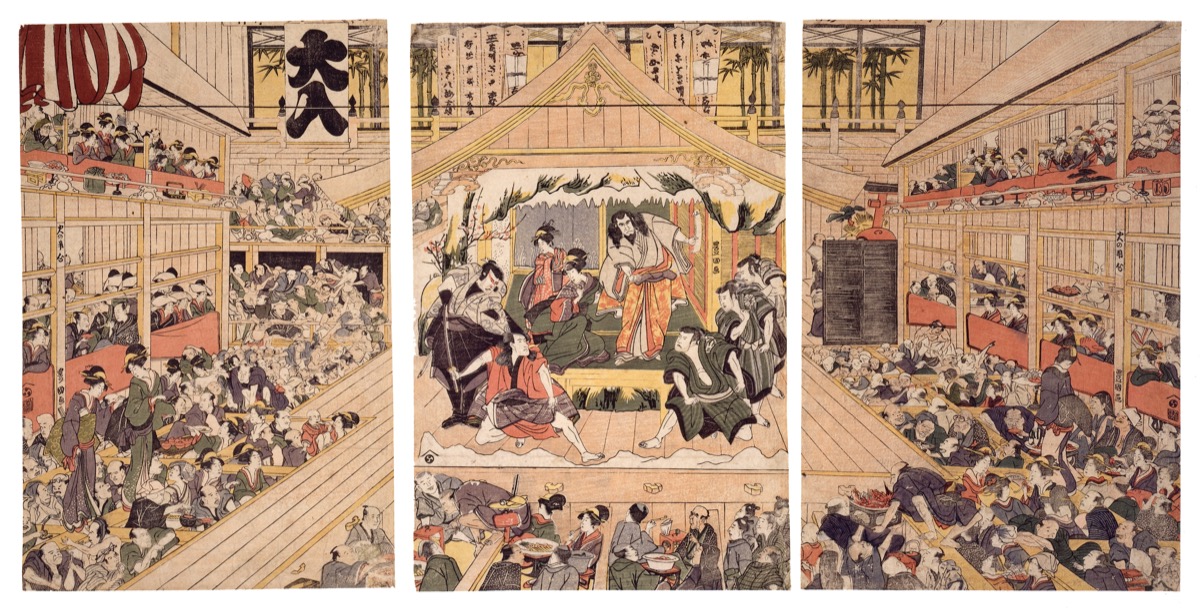
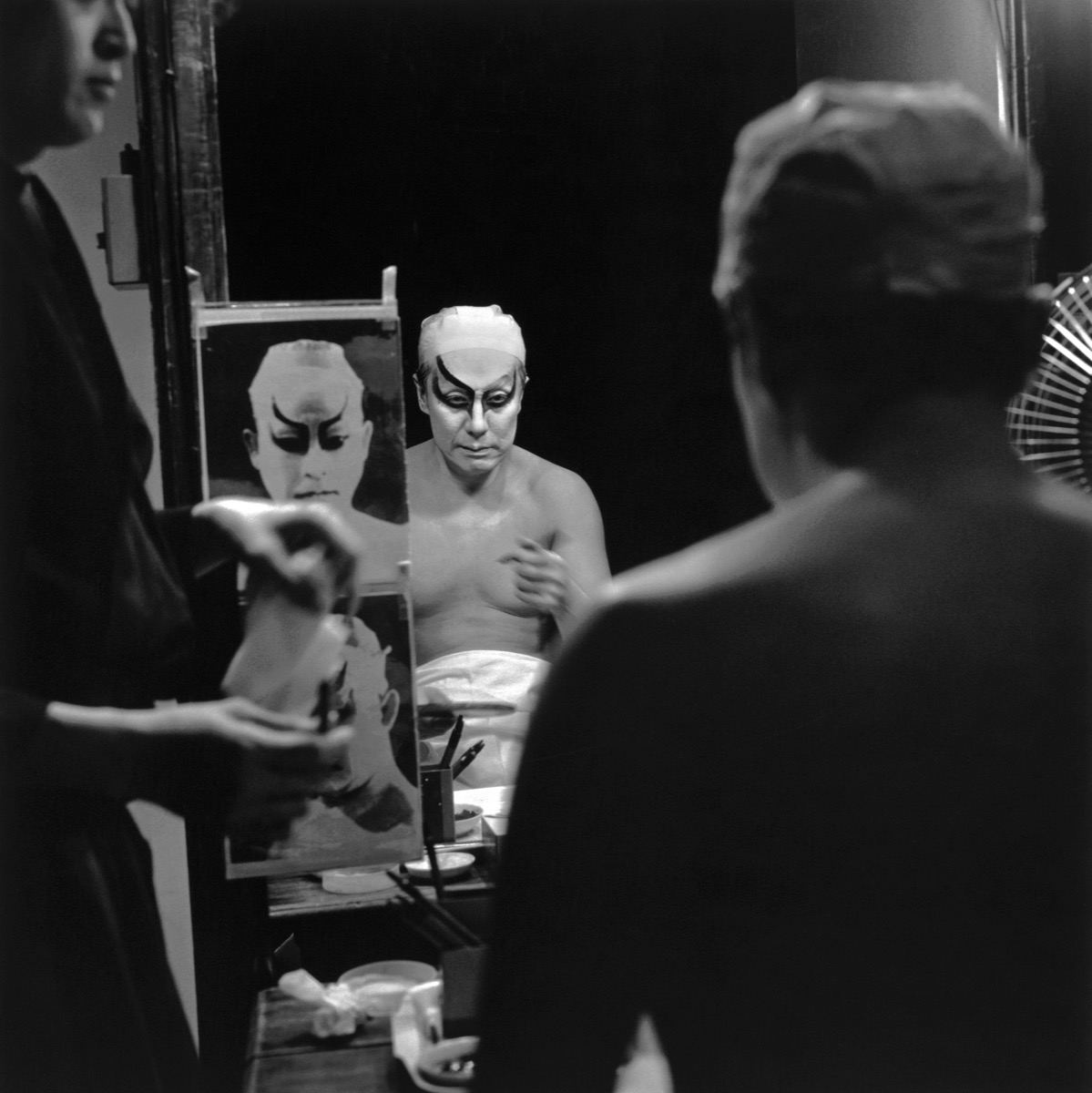
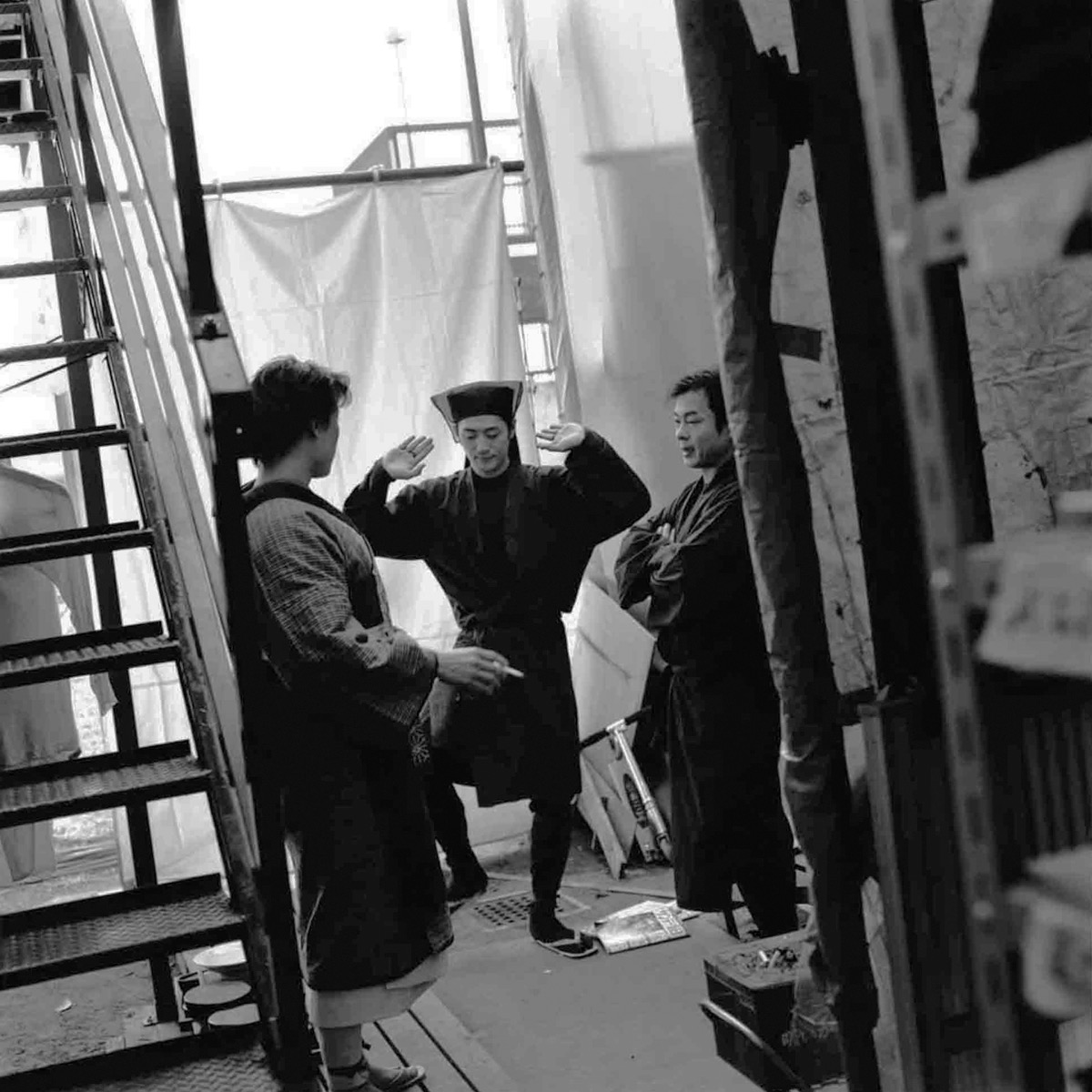
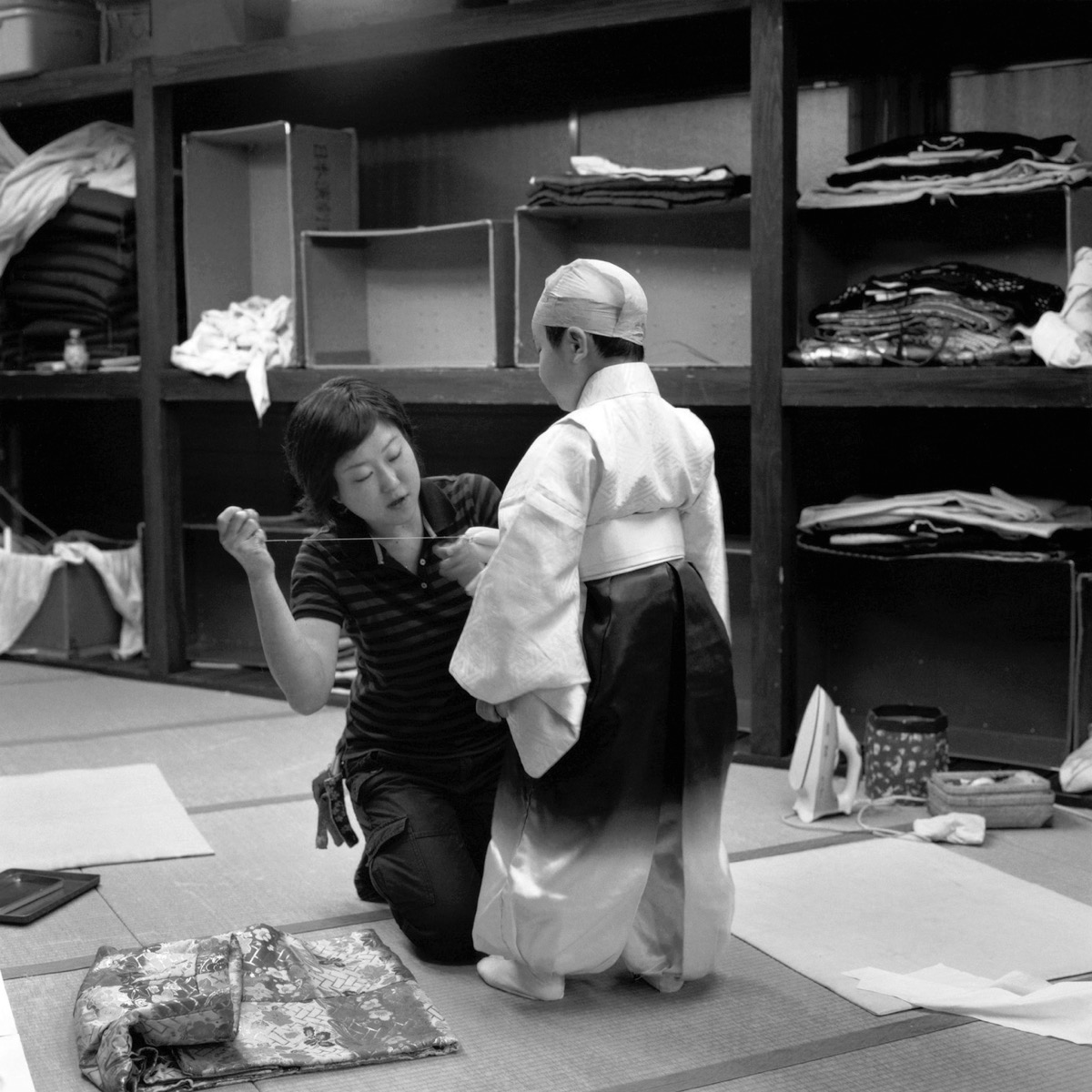
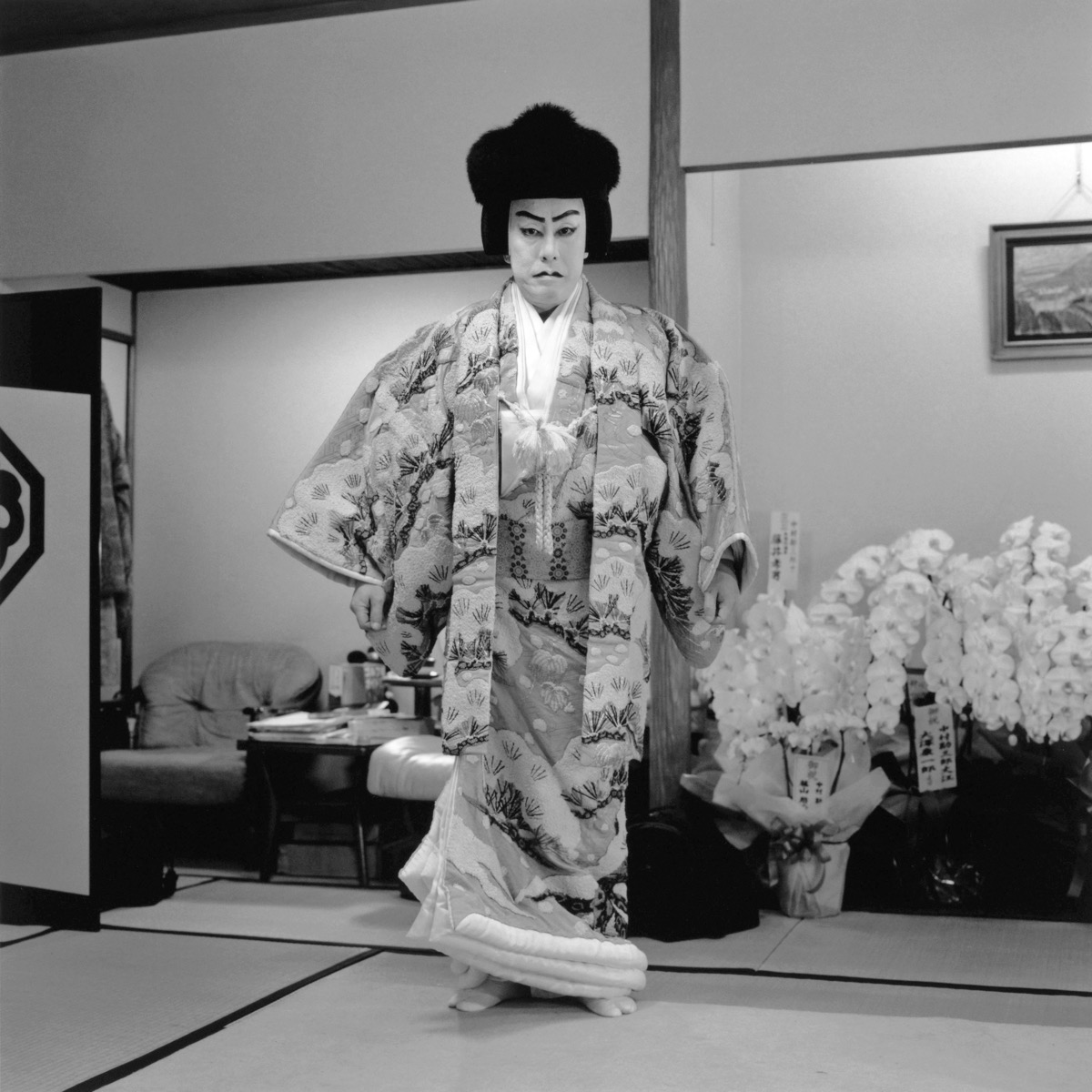
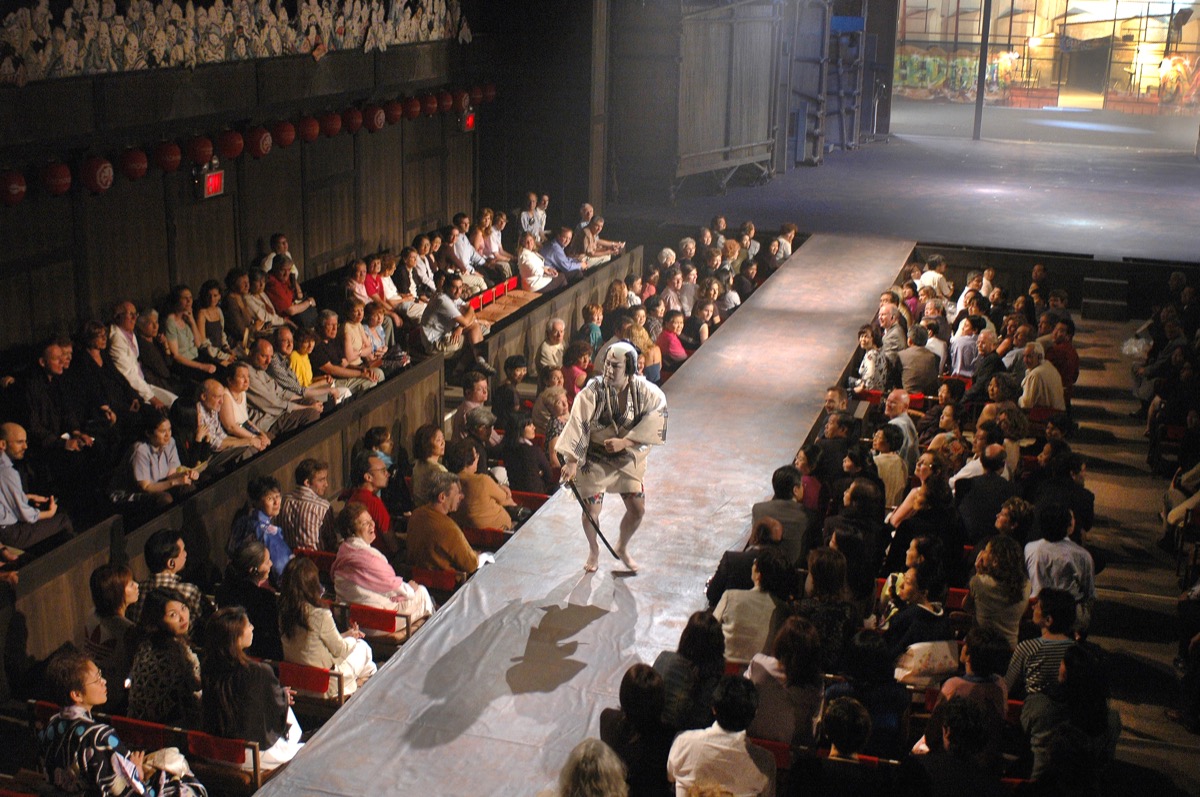
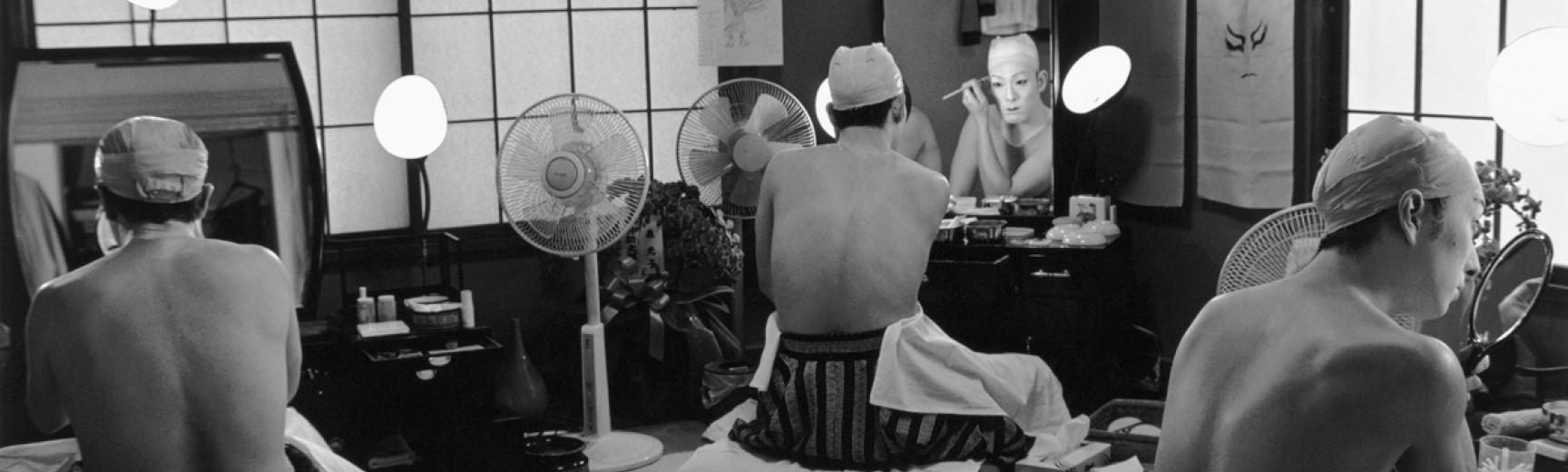
This exhibition presents a selection of photographs on the subject of kabuki theatre, the popular Japanese style of drama which was established around four hundred years ago and still thrives today. Drawing on the recent work of photographers Akio Kushida and Stephanie Berger, the large-format prints explore the history and traditions of the dramatic form, taking for their focus the celebrated actor Nakamura Kanzaburō XVIII and his two sons and heirs. Also conveyed – in the photographs and with accompanying video – is the energetic and colourful, sometimes raucous nature of modern-day kabuki performance.
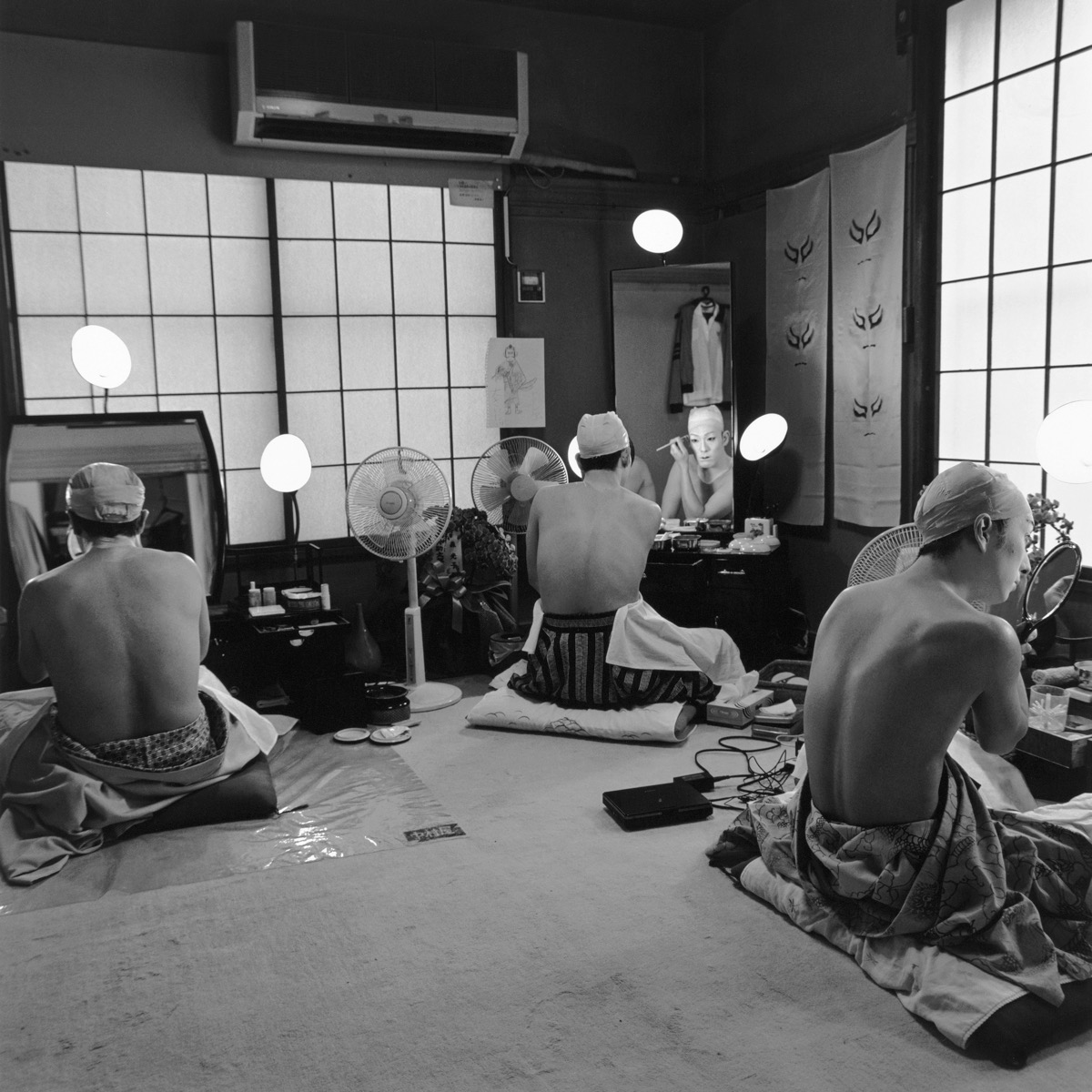
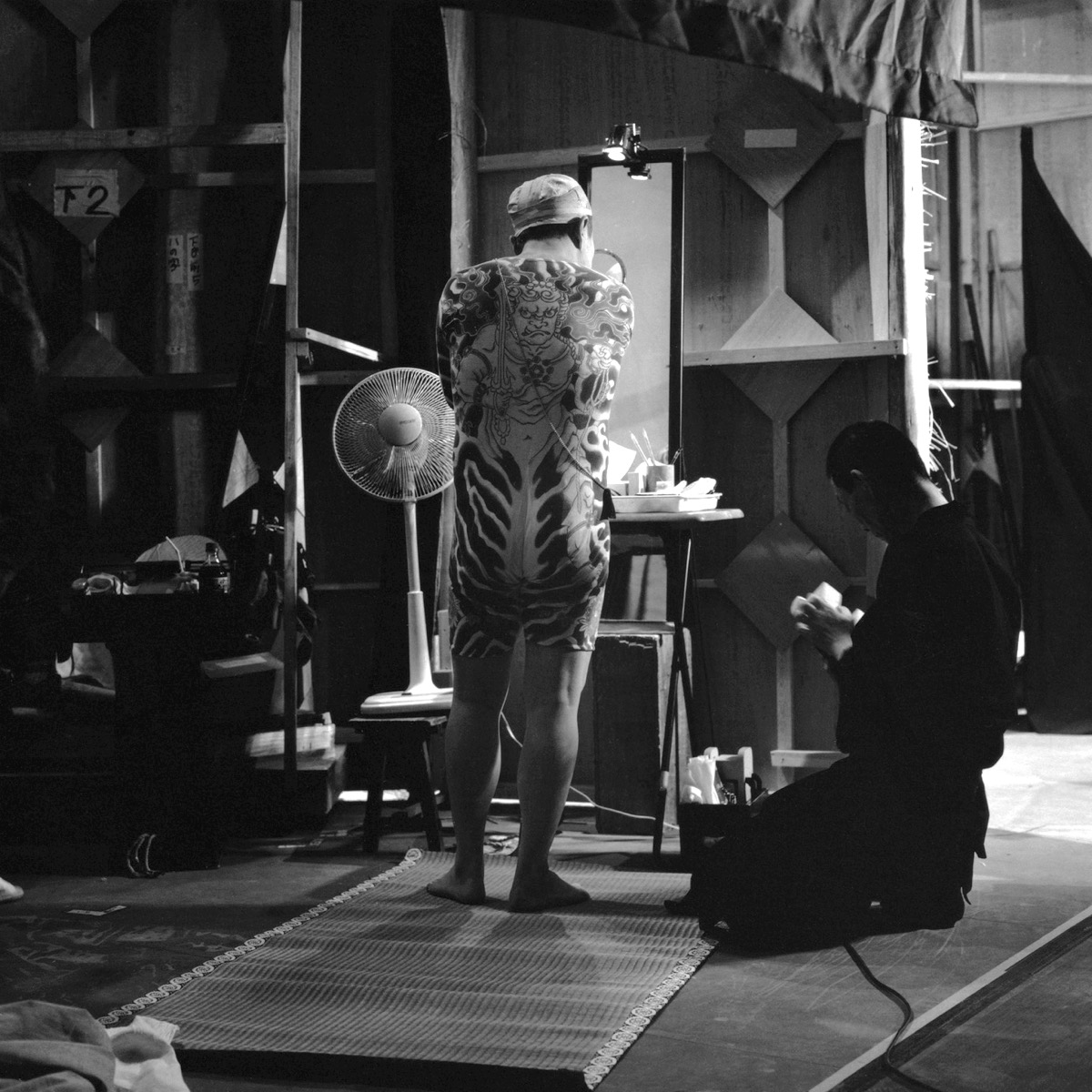
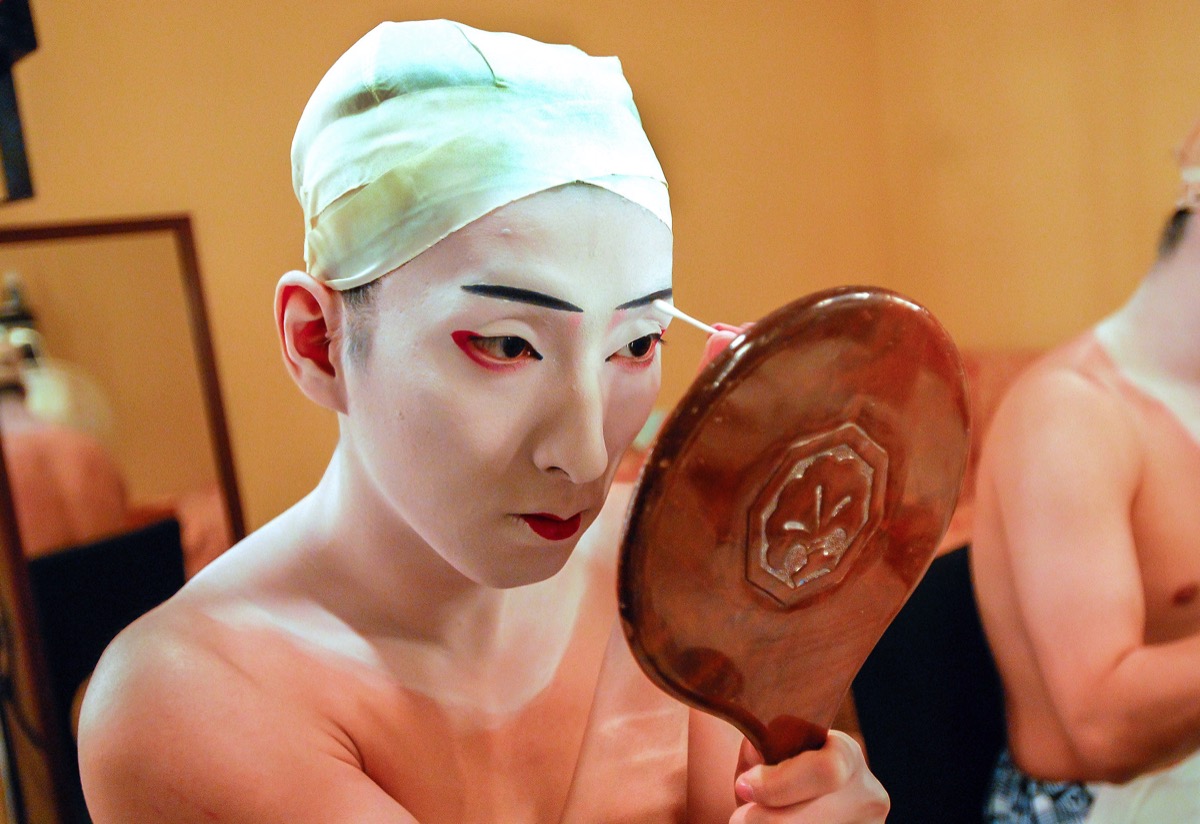
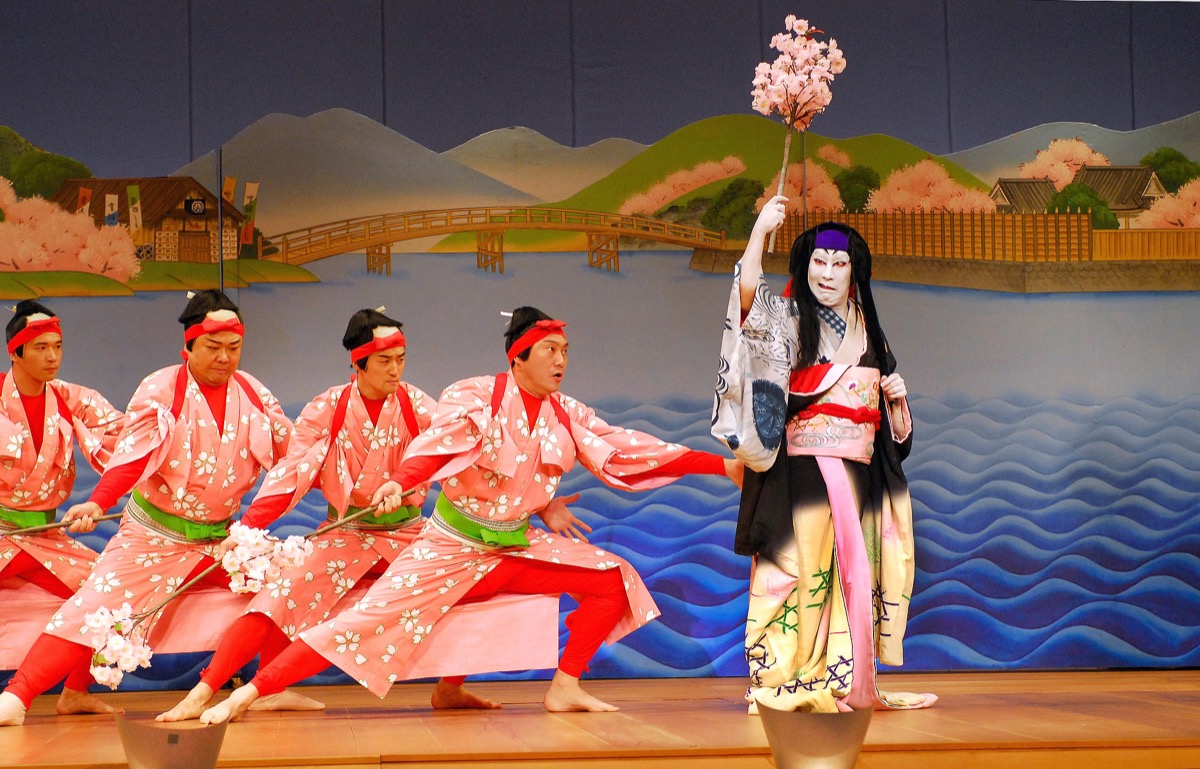
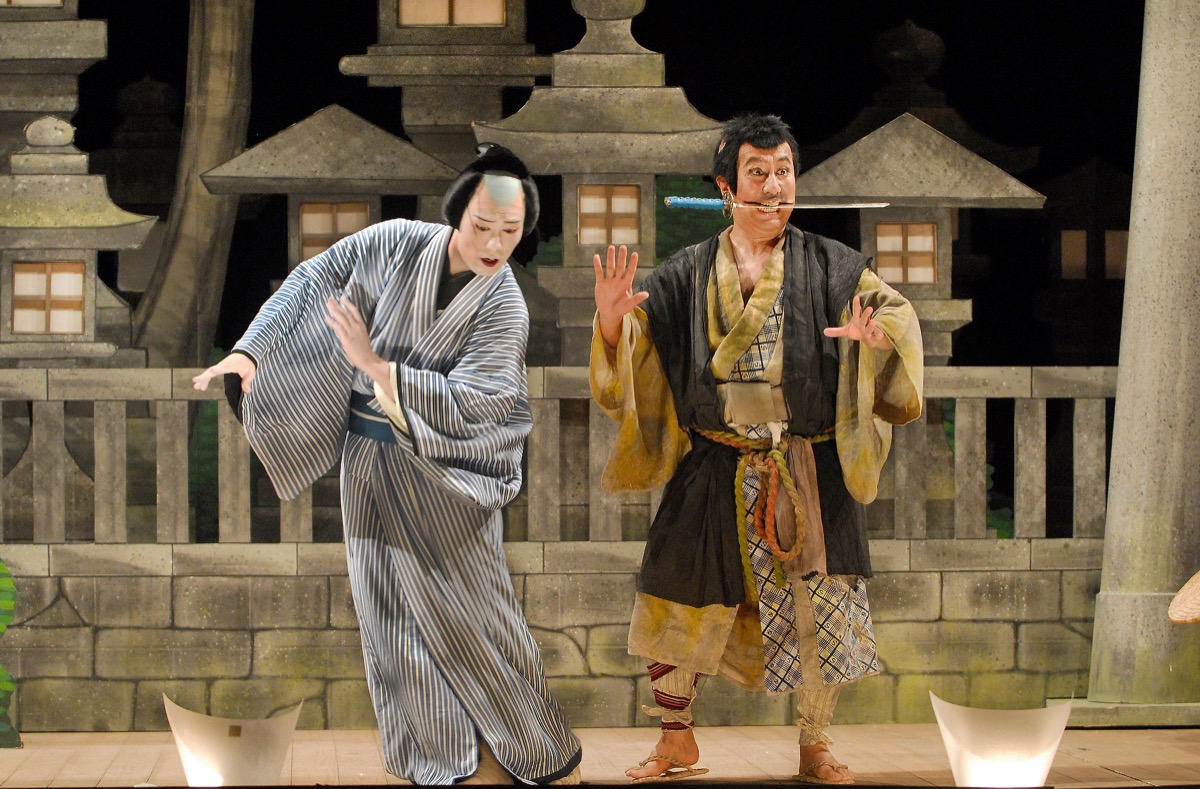
In the first section of the exhibition the viewer was transported to a world rarely witnessed by outsiders, dimly lit and governed by ancient traditions and routine. Here we see the actors as they dress and apply thick make-up (kumadori), have wigs fitted, rehearse their lines and practise final dance steps, preparing to take the stage. Thereafter, when the curtain is raised, we see the same male actors performing, sometimes in spectacular central roles as women (onnagata), in historic plays such as Hokaibō and Natsu Matsuri Naniwa Kagami (Summer Festival: A Mirror of Osaka).
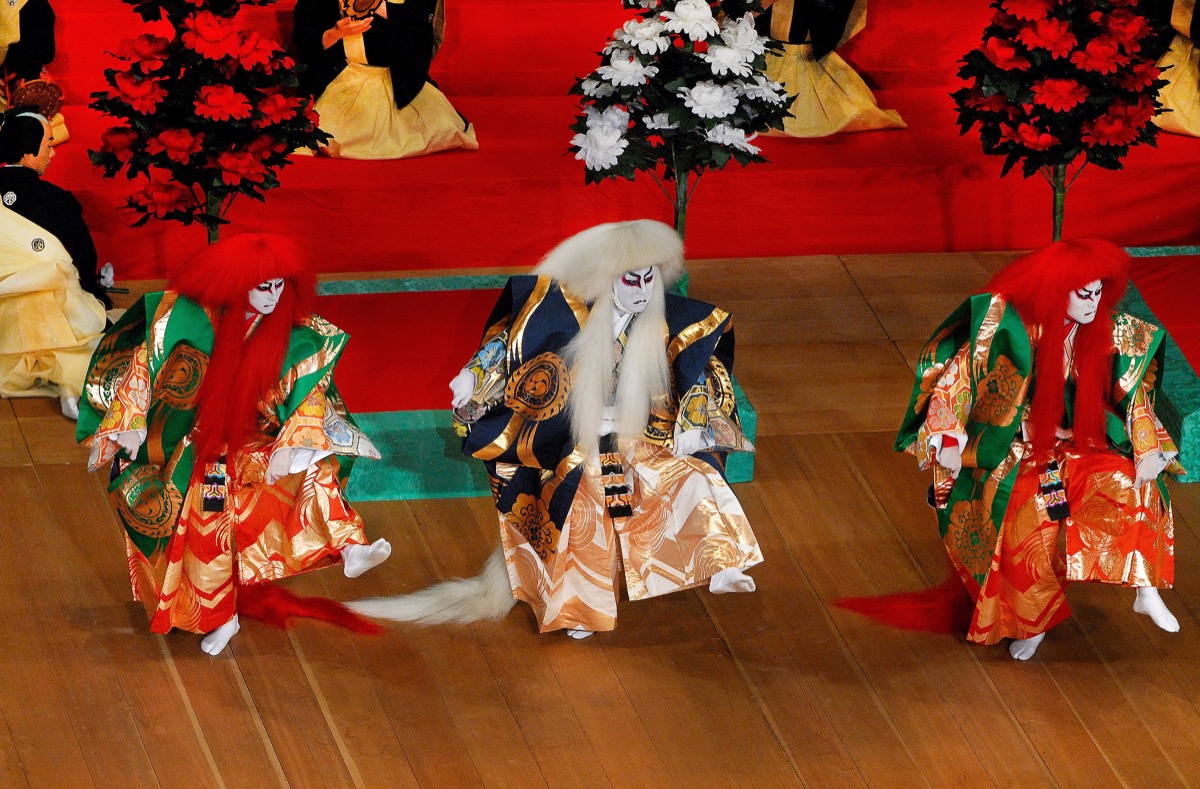
At the centre of these photographs is one of Japan’s oldest and most important acting dynasties, led until his death by Kanzaburō, and now continued by his sons, Nakamura Kankurō VI (previously Nakamura Kantarō II) and Nakamura Shichinosuke II, who were both raised in the art. The inherited nature of kabuki is seen in the classic play Renjishi, a dance-drama now closely associated with the Nakamura line, in which a father lion – the actor wearing an elaborate costume with long white mane – tests the strength and endurance of his son, preparing him for the life ahead.
About the Photographers
Akio Kushida is a Japanese photographer who for more than a decade has been developing an important body of work on the history and traditions of kabuki theatre. Married to one of the country’s leading directors, Akio has been granted rare and privileged access ‘behind the scenes’ of this dramatic form, allowing the viewer to glimpse the centuries-old traditions and inherited rituals as the actors prepare themselves for the stage. Her work focuses in particular on the important Nakamura family of actors, eighteenth and nineteenth generations of one of the most celebrated lines of kabuki performers, whose legacy continues with the success of their contemporary kabuki company Heisei Nakamura-za.
Stephanie Berger is an American documentary photographer whose recent work centres mainly on performance and cultural events. Based in New York, she has worked widely across the city and at leading venues including Carnegie Hall and the Metropolitan Museum of Art, as well as for The New York Times (‘Arts and Culture’). Employed since 1996 as staff photographer for the Lincoln Center Festival, Berger has photographed many leading performers in the fields of theatre and dance, including notably choreographer Merce Cunningham, subject of her recent book. She photographed Heisei Nakamura-za during tours to the United States in 2004, 2007 and, most recently, 2015. Her photographs of productions including Renjishi and Hokaibō capture vividly the bright colours and lively nature of the kabuki genre, a form of popular theatre unlike anything else in the Japanese repertoire.